Tag: Pacific Palisades Real Estate

  • What Happens After You Accept an Offer on Your Home? A Guide for California Sellers

    What Happens After You Accept an Offer on Your Home? A Guide for California Sellers

    What Happens After You Accept an Offer on Your Home? A Guide for California Sellers

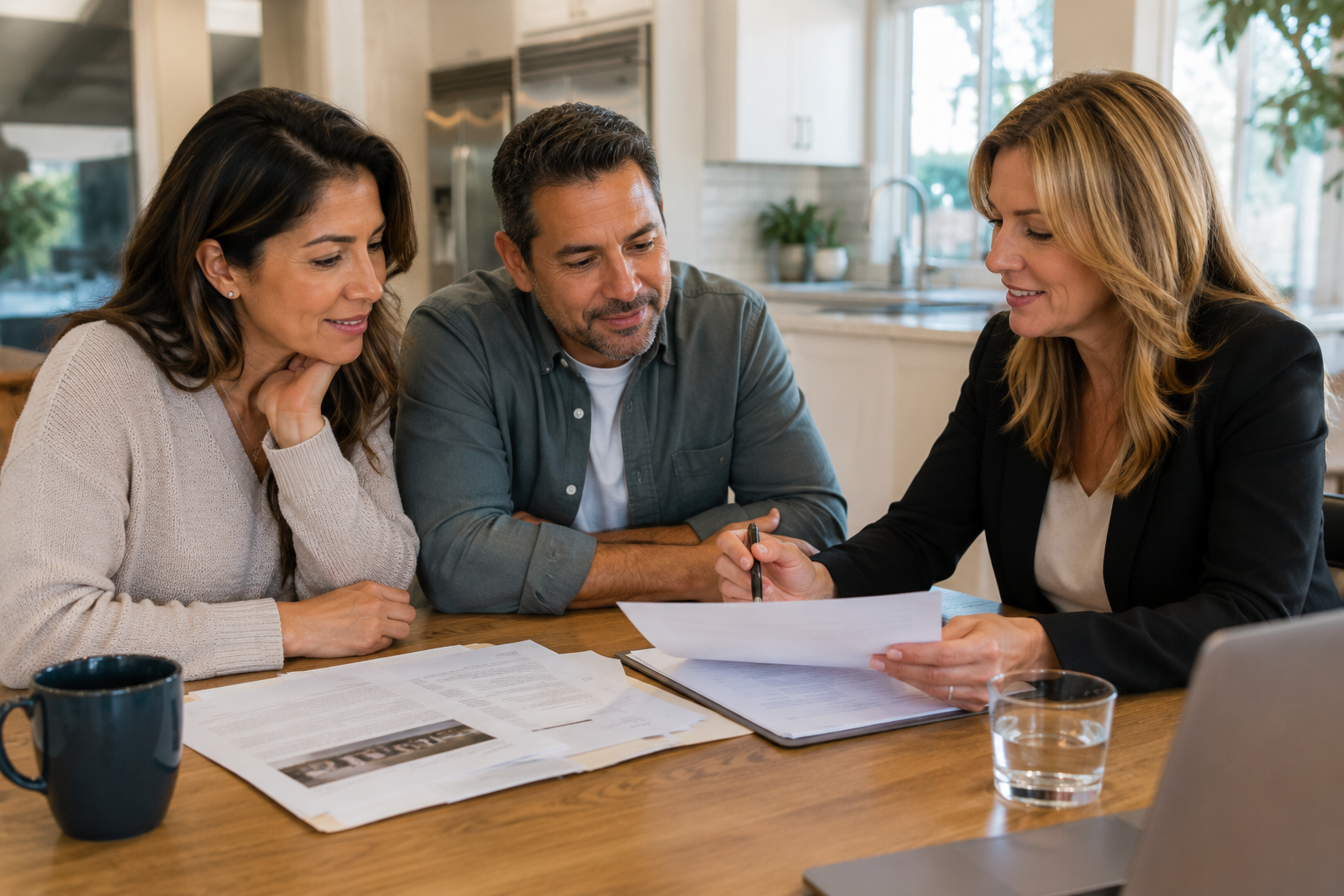
    Receiving an offer on your home can be exciting, and accepting one can feel like a major milestone. But for a seller, an accepted offer is not the end of the process. In many ways, it begins the next important stage of the transaction.

    Once a home is under contract, there are still several steps that may need to happen before the sale closes. Depending on the terms of the agreement, these can include the buyer’s deposit, inspections, disclosures, an appraisal, financing, contingency periods, requests for repairs or credits, and the final steps leading to closing.

    Understanding what may happen after accepting an offer can help sellers feel more prepared and make better decisions throughout the transaction.

    The Purchase Agreement Becomes Your Road Map

    Once an offer has been accepted and a contract has been formed, the purchase agreement becomes an important road map for the transaction.

    The agreement establishes the price and other terms the buyer and seller have agreed upon. It can also include important deadlines and contingency provisions.

    This is why I believe sellers should look beyond the purchase price when reviewing an offer. Two buyers offering the same amount of money may be proposing very different terms.

    Before accepting an offer, it is important to understand not only what the buyer is offering to pay, but also what the agreement will require from both sides after acceptance.

    The Buyer’s Deposit

    The purchase agreement may require the buyer to place an initial deposit into escrow within the time specified in the contract.

    Sellers sometimes hear the phrase earnest money deposit used to describe this money. The deposit demonstrates the buyer’s commitment to the transaction, but its treatment is governed by the purchase agreement and applicable California law.

    A seller should not assume that accepting an offer means the deposit immediately belongs to the seller if the transaction does not close. What happens to a deposit can depend on the circumstances, the contract, contingencies, and other legal considerations.

    This is one of the reasons the details of the purchase agreement matter so much.
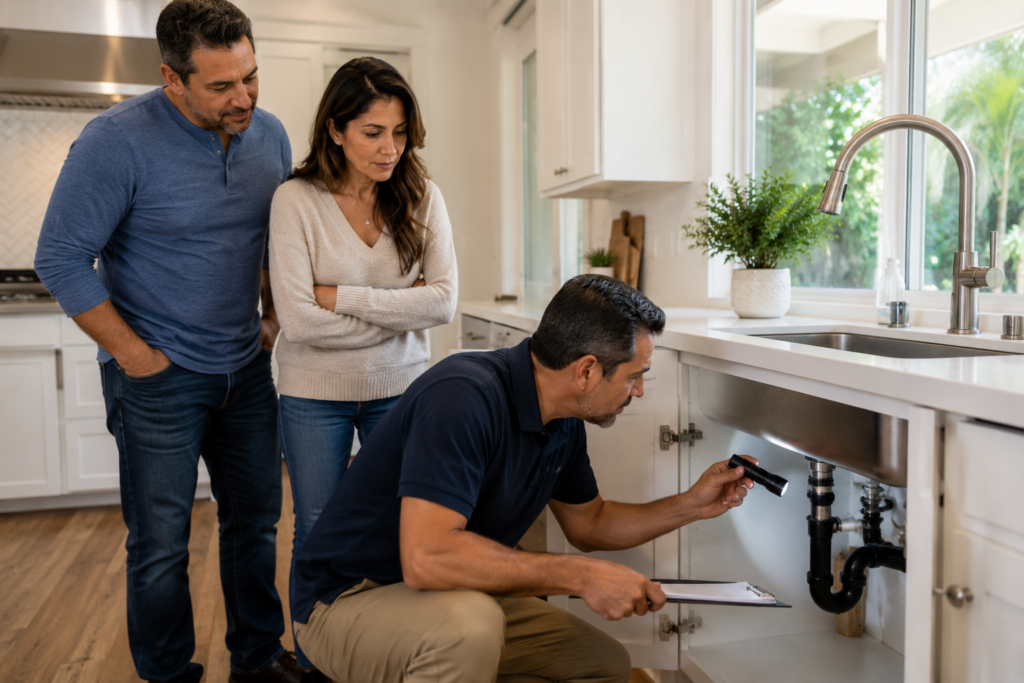
    Home inspection taking place at a Los Angeles area house after a seller accepts a buyer's offer
    After an offer is accepted, a home inspection can help buyers learn more about the property and may lead to additional questions or discussions before closing.

    Inspections May Bring New Questions

    If the buyer has an investigation or inspection contingency, the period after acceptance may include inspections of the property.

    A general home inspection is common, but depending on the property and the buyer’s concerns, additional inspections may also be requested.

    An inspection does not necessarily mean something is wrong with the house. Buyers use inspections to learn more about the property they are purchasing.

    The results, however, can lead to additional conversations.

    A buyer may accept the property as it is, request repairs, ask for a credit, seek a price adjustment, request additional information, or exercise rights available under the contract.

    A request from a buyer does not automatically mean a seller must agree to it. The response will depend on the purchase agreement, the circumstances, and what the seller believes is appropriate.

    The Appraisal Can Matter When the Buyer Is Financing

    When a buyer is obtaining a mortgage, the lender may require an appraisal.

    The appraiser provides an opinion of the property’s value for the lender. This is different from the home inspection, which focuses primarily on the property’s physical condition.

    If the property appraises at or above the amount needed for the buyer’s financing, this part of the transaction may proceed without much discussion.

    If the appraisal comes in lower than expected, the situation can become more complicated. What happens next depends on the contract, including whether the buyer has an appraisal contingency, as well as the buyer’s financing and the decisions made by the parties.

    This is another example of why the strongest offer is not always determined by price alone.

    The Buyer’s Loan Continues Through the Process

    A buyer who has been preapproved for financing still has work to complete after the offer is accepted.

    The lender may continue reviewing the buyer’s income, assets, credit, employment, property information, appraisal, and other documentation before giving final loan approval.

    From a seller’s perspective, this is why the financial strength of an offer can be important when evaluating buyers.

    A preapproval can provide useful information, but it is not the same as a guarantee that a loan will ultimately fund.

    Contingencies and Deadlines Matter

    Contingencies are an important part of many residential purchase agreements.

    Depending on the contract, a buyer may have contingencies related to investigations, an appraisal, financing, or other matters. The specific rights and deadlines depend on the actual agreement.

    Sellers should understand which contingencies are included in the accepted offer and the time periods associated with them.

    As the transaction progresses, there may be points when the buyer is asked to remove certain contingencies in accordance with the contract.

    Rather than focusing only on the anticipated closing date, I think sellers benefit from understanding the smaller contractual milestones that occur along the way.

    What Happens If the Buyer Requests Repairs?

    After inspections, sellers sometimes receive a request for repairs or other concessions.

    This can make homeowners nervous, particularly if they believed the price had already been fully negotiated.

    In reality, an inspection period can create another point of discussion between the parties.

    The buyer may identify items that were not obvious when the offer was written. The seller then needs to evaluate the request and decide how to respond based on the contract and circumstances.

    There is no universal answer to every repair request. The condition of the property, the nature of the issue, the strength of the transaction, other available options, and the seller’s priorities can all matter.

    The goal should be to make a thoughtful decision rather than reacting emotionally to the request.

    Preparing for the Final Days Before Closing

    As the transaction moves toward closing, escrow and the professionals involved in the transaction coordinate the documents and requirements necessary to complete the sale.

    The buyer may conduct a final verification of the property’s condition before closing, subject to the terms of the agreement.

    Sellers should also make sure they understand when they are expected to move out, what condition the property should be left in, which items are included in the sale, and when possession will transfer.

    These details are worth discussing well before the final day.

    Closing and the Transfer of Ownership

    In California, signing documents is an important step, but signing alone does not necessarily mean the sale has officially closed.

    The transaction generally reaches closing when the required funds and documents have been handled and the deed transferring ownership is recorded with the county.

    Once the transaction closes, the seller receives the proceeds due to them through escrow after applicable loans, costs, commissions, taxes, or other amounts associated with the transaction have been accounted for.

    The exact timing and details depend on the individual transaction.

    An Accepted Offer Is an Important Beginning

    Selling a home involves much more than finding someone willing to buy it.

    The period between accepting an offer and closing is where many of the details of the transaction are worked through. Inspections, financing, appraisal, contingencies, disclosures, escrow, and contractual deadlines can all play a role.

    Knowing this before you list can also help you evaluate offers more thoughtfully when they arrive.

    If you are considering selling a home in Pacific Palisades, Santa Monica, or elsewhere on the Westside of Los Angeles, I would be happy to walk you through the process from preparing the property and reviewing the MLS data to evaluating offers and understanding what happens after your home goes under contract.

    My goal is for sellers to understand not only what they are signing, but what comes next.

    With gratitude and a heart for service,

    Claudia Backus, MBA
    California Real Estate Broker | REALTOR®
    Serving Pacific Palisades & the Westside of Los Angeles
  • What Do You Have to Disclose When Selling a Home in California? A Guide for Los Angeles Homeowners

    What Do You Have to Disclose When Selling a Home in California? A Guide for Los Angeles Homeowners

    What Do You Have to Disclose When Selling a Home in California? A Guide for Los Angeles Homeowners

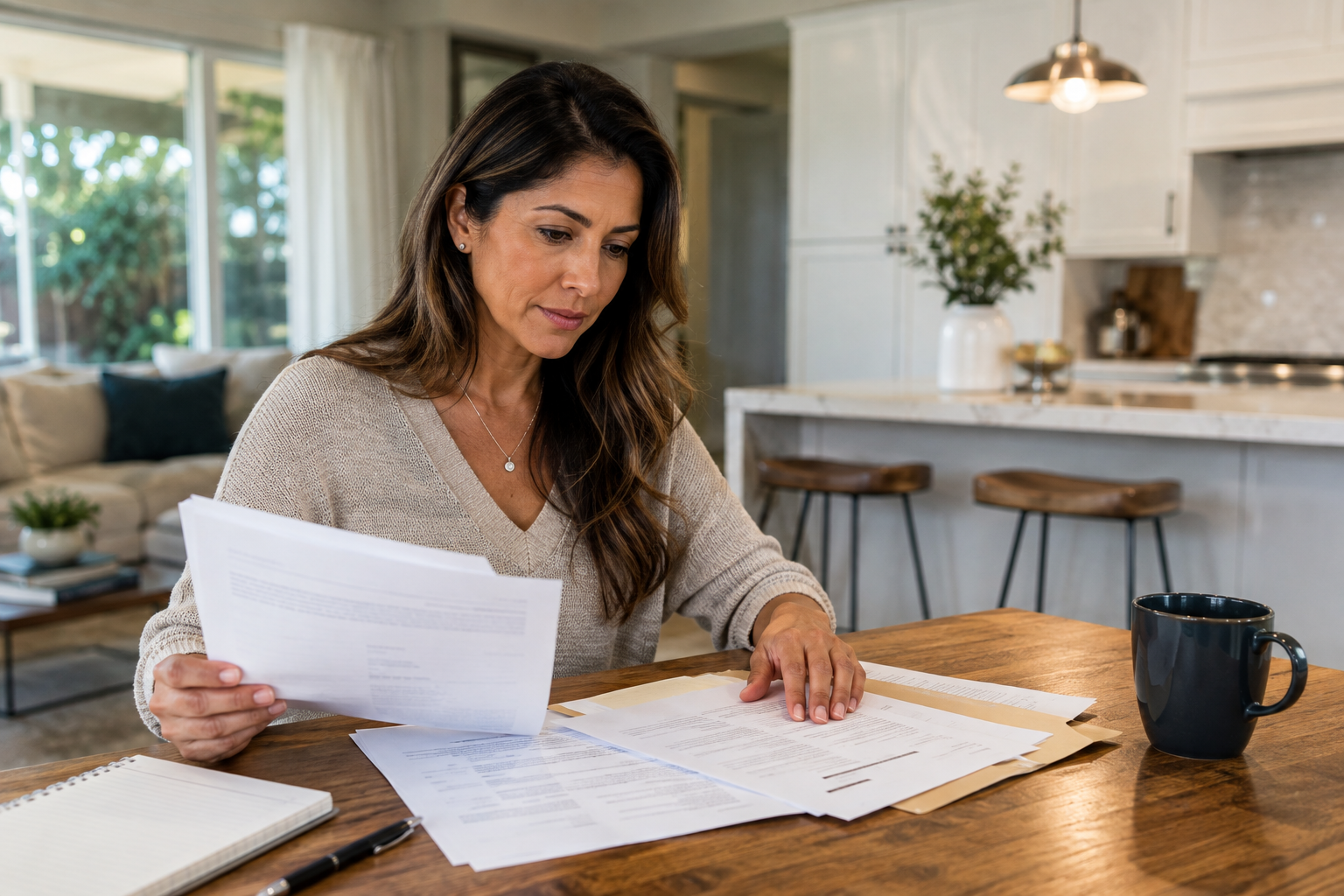
    When homeowners start thinking about selling, much of the attention naturally goes to preparing the house, choosing a listing price, taking photographs, and getting the property on the market. There is another part of the process that may not be as exciting, but it is extremely important: disclosures.

    California has extensive disclosure requirements for residential real estate transactions. Sellers may be asked to provide information about the property, its condition, known defects, improvements, hazards, and other circumstances that could affect a buyer’s decision.

    For a homeowner who has lived in the same property for many years, completing disclosures can sometimes feel overwhelming. You may know a great deal about your home, but you may not immediately remember every repair, leak, improvement, insurance claim, or issue that has occurred over the years.

    Understanding the purpose of disclosures before you sell can make this part of the process much easier.

    What Is the Purpose of Seller Disclosures?

    The basic idea behind disclosures is transparency.

    A buyer is making a significant financial decision and needs information about the property to evaluate that decision. Some things are easy for a buyer to see during a showing. Other things may not be visible at all.

    A buyer walking through a beautifully presented home, for example, may have no way of knowing about a previous roof leak, drainage problem, unpermitted alteration, or other issue unless that information is disclosed.

    California residential transactions can involve several disclosure documents depending on the property and circumstances. One of the best known is the Transfer Disclosure Statement, commonly referred to as the TDS.

    The TDS asks sellers questions about the property and about conditions or issues they are aware of.

    What Types of Things Might a Seller Need to Disclose?

    The exact disclosures required depend on the property and transaction, which is why sellers should receive guidance specific to their situation.

    Generally, disclosures can involve information about the physical condition of the property and known issues that may affect its value or desirability.

    Examples can include previous water intrusion, roof problems, structural modifications, drainage or grading concerns, environmental hazards, certain neighborhood nuisances, additions or alterations completed without required permits, and damage associated with events such as fires, floods, earthquakes, or landslides.

    There may also be additional disclosure requirements depending on factors such as the property’s location, age, ownership structure, and circumstances of the sale.

    The important point for sellers is not to try to memorize every possible disclosure before listing their home. It is to understand that disclosure is a meaningful part of the transaction and deserves careful attention.

    What If an Issue Was Repaired Years Ago?

    This is a question homeowners may naturally have.

    If something happened in the past and was repaired, it can be tempting to assume that it no longer matters because the problem has been resolved.

    However, a previous condition may still be relevant to the disclosure process.

    For example, if there was water intrusion several years ago and the source was repaired, the history of that issue may still be information that should be addressed in the appropriate disclosure documents.

    Rather than deciding on your own that an old problem is no longer important, discuss it with your real estate professional and, when appropriate, obtain legal or other professional advice.

    Being transparent about a past issue does not automatically make a property undesirable. Homes require maintenance and repairs. Buyers generally understand that.

    Problems are more likely to arise when important information is discovered later and the buyer believes it should have been disclosed earlier.

    What About Improvements and Permits?

    Many Los Angeles homes have been remodeled, expanded, or changed over time.

    A homeowner may have replaced windows, remodeled a kitchen, added a bathroom, converted space, built a deck, changed electrical systems, or completed other improvements.

    If you are preparing to sell, it can be useful to start gathering whatever records you have relating to significant work on the property.

    Depending on the circumstances, questions about permits, structural modifications, alterations, or repairs may become part of the disclosure process.

    If you do not know whether previous work was permitted, particularly work completed before you owned the property, do not guess. Explain what you actually know and seek appropriate guidance about how the information should be handled.

    What If You Truly Do Not Know?

    Sellers are not expected to magically know everything that has ever happened to a property.

    There is an important difference between something you genuinely do not know and something you know but choose not to disclose.

    When completing disclosures, sellers should answer carefully based on their actual knowledge rather than making assumptions.

    This is another reason I would not recommend rushing through disclosure documents. Read the questions carefully, think about your history with the property, and ask questions when you do not understand what a form is asking.

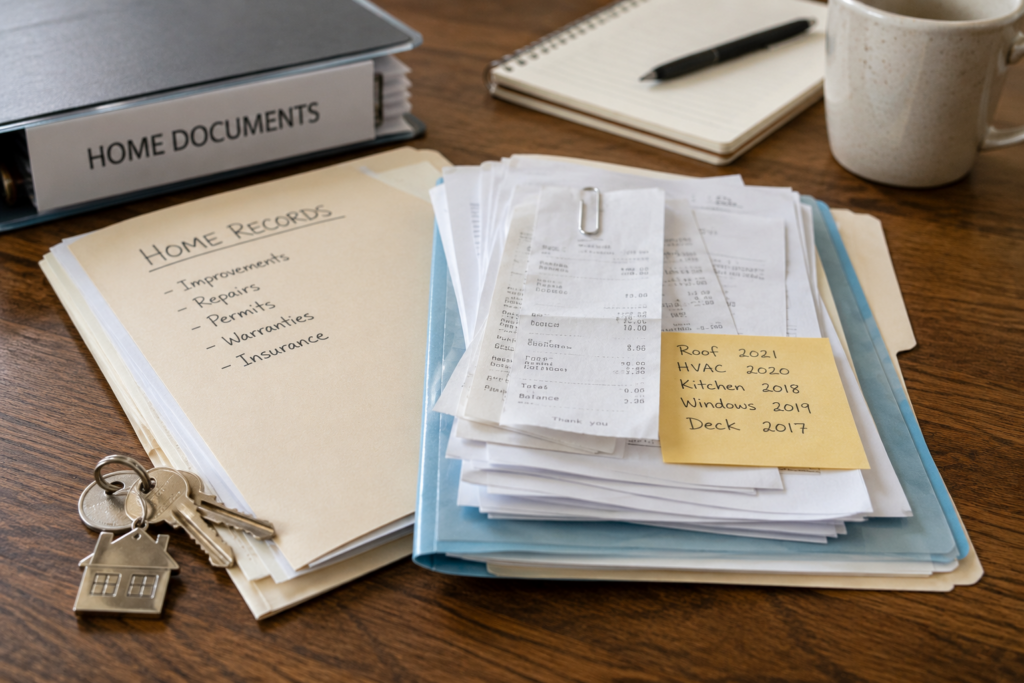
    Home records, repair receipts, permits and house keys organized on a table while preparing to sell a home.
    Gathering information about repairs, improvements and the history of a property can help homeowners prepare for the disclosure process before selling.

    Preparing Before Your Home Goes on the Market

    If you are considering selling, you can make the disclosure process easier by gathering information about your home before you need it.

    Look for invoices from major repairs, permits you may have retained, warranties, information about improvements, insurance related records that may be relevant, and documents associated with systems such as the roof, plumbing, electrical, HVAC, or solar.

    You do not need to create a perfect history of your house. Many homeowners simply do not have every document from every repair.

    The goal is to begin organizing what you do have and thinking carefully about what you know about the property.

    This can also help you identify questions that should be addressed before the home is actively marketed.

    Why Transparency Can Help a Transaction

    Sellers sometimes worry that disclosing a problem will discourage a buyer.

    That concern is understandable, but buyers also appreciate having information that helps them make an informed decision.

    A home does not need to be perfect to sell. In Los Angeles, buyers purchase homes of different ages and conditions every day.

    Providing information early can allow buyers to evaluate the property, conduct their inspections, ask questions, and decide whether the home is right for them.

    It can also reduce the possibility of a buyer learning something later in the transaction that comes as a surprise.

    Disclosures Are One Part of Preparing to Sell

    When I think about preparing a home for the market, I do not think only about photographs, staging, price, and marketing.

    I also think about the information behind the property.

    What has happened to the home over the years? What improvements have been made? Are there documents that should be located? Are there questions that should be answered before buyers begin looking at the property?

    Addressing these things early can make the selling process more organized and help sellers understand what to expect before an offer arrives.

    If you are considering selling a home in Pacific Palisades, Santa Monica, or elsewhere on the Westside of Los Angeles, I would be happy to help you look at the steps involved in preparing your property for the market, including the disclosure process and the information you may want to begin gathering.

    Every property has its own history. Understanding that history and presenting it thoughtfully is an important part of preparing for a successful sale.

    Claudia Backus, MBA
    California Real Estate Broker | REALTOR®
    Serving Pacific Palisades & the Westside of Los Angeles
  • Should You Price Your Home to Get Multiple Offers? What Los Angeles Sellers Need to Know

    Should You Price Your Home to Get Multiple Offers? What Los Angeles Sellers Need to Know

    Should You Price Your Home to Get Multiple Offers? What Los Angeles Sellers Need to Know

    When homeowners prepare to sell, one of the biggest decisions they have to make is also one of the first: What should the listing price be?

    It can be tempting to think that the best strategy is simply to start as high as possible and see what happens. On the other hand, sellers sometimes hear that they should price their home lower in hopes of attracting several buyers and creating multiple offers.

    Both ideas can sound reasonable, but neither should be applied automatically. The right pricing strategy depends on the property, the competition, current buyer activity, and what is happening in the local market at the time the home is listed.

    For Los Angeles homeowners, where conditions can vary significantly from one neighborhood to another, understanding that context is especially important.

    What Does It Mean to Price for Multiple Offers?

    Pricing for multiple offers generally means choosing a listing price designed to attract a larger pool of qualified buyers and encourage competition for the property.

    That does not necessarily mean pricing a home far below its value. It means looking carefully at comparable sales, current competing listings, recent buyer activity, the condition of the property, and the price ranges buyers are currently searching.

    If several buyers see value in the same property at the same time, competition may develop naturally. Some buyers may decide to improve their price or terms because they know they are not the only interested party.

    However, multiple offers are never guaranteed. A seller can choose a thoughtful and competitive listing price and still receive one offer, several offers, or no immediate offers at all.

    The Market Has to Support the Strategy

    Before deciding how to price a home, I believe it is important to understand what buyers are actually doing in that specific market.

    How many similar homes are currently available? How long are they taking to sell? Are homes selling close to their original asking prices? Are new listings receiving immediate attention, or are buyers taking more time to make decisions?

    These questions provide much more useful information than simply assuming that a strategy that worked for another property will work for yours.

    Even within Los Angeles, two nearby neighborhoods can behave differently. The same can be true within a neighborhood when homes fall into different price ranges or offer very different features.

    This is one reason I pay close attention to active inventory in addition to recently sold properties. Sold homes tell us what buyers were willing to pay in the recent past. Active listings show us what your home would be competing against if it entered the market today.

    The Asking Price Is Part of Your Marketing

    Sellers sometimes think about price only as the amount they ultimately want to receive for their home. I also think of the listing price as part of the property’s marketing strategy.

    Before buyers schedule a showing, they are usually looking at homes online and comparing several options. Price affects whether a property appears in their search and how it compares with the other homes they are considering.

    A home can be beautiful and well presented, but if buyers perceive the asking price as disconnected from the market, some may decide not to see it at all.

    That matters because the first goal of marketing a home is to get the right buyers interested enough to take the next step and see the property.

    Could Pricing Too Low Be a Risk?

    Yes, which is why pricing for competition should never mean choosing an artificially low number simply to generate attention.

    There is no guarantee that buyers will bid a property up to the price a seller hopes to receive.

    The listing price should be a number the seller understands and is comfortable putting into the market as part of an overall strategy. The goal is not to gamble on a bidding war. The goal is to position the property intelligently based on the available information.

    Could Pricing Too High Be a Risk?

    Pricing too high can create a different problem.

    When buyers have access to many listings and can compare homes quickly, they often recognize when a property appears expensive relative to similar choices. Instead of making a lower offer, some buyers may simply move on to another home.

    If that happens repeatedly, the property can accumulate days on market. A later price adjustment may generate new interest, but by then buyers may also begin wondering why the home has not sold.

    This does not mean a seller should automatically choose a low listing price. It means the original price should be supported by the market as much as possible.

    The Highest Offer Is Not Always the Best Offer

    If a pricing strategy does result in multiple offers, sellers then have another decision to make.

    The offer with the highest purchase price is not automatically the strongest offer.

    Price matters, but so do financing, contingencies, the proposed closing timeline, the buyer’s deposit, and other terms of the transaction. A slightly lower offer with strong financing and terms that work well for the seller may sometimes be more attractive than a higher offer with greater uncertainty.

    Every offer should be evaluated as a complete package.

    Real estate broker reviewing comparable home sales and active listings to determine a pricing strategy for a Los Angeles home seller
    A thoughtful pricing strategy considers recent sales, current competition and how buyers are responding to similar homes in the local market.

    What I Would Look at Before Pricing a Los Angeles Home

    Before recommending a pricing strategy, I would want to understand the property and the seller’s goals first.

    I would then look at comparable sales, current listings, pending activity when available, days on market, price changes, neighborhood competition, property condition, and the way buyers appear to be responding to similar homes.

    I would also want to know what makes the property different.

    A remodeled home may compete differently from one that needs significant updating. A home with a view, an unusual lot, a desirable location, or another feature that is difficult to replicate may require additional judgment when comparing it with recent sales.

    The numbers provide the foundation, but they still need context.

    There Is No Universal Pricing Formula

    One of the things I continue to appreciate about real estate is that the more market information we have, the better the questions we can ask.

    There is no single pricing strategy that makes sense for every seller.

    Sometimes pricing very close to expected market value may be appropriate. In another situation, positioning a property to encourage greater buyer interest may make sense. There may also be circumstances where the characteristics of a particular home require a different approach entirely.

    The important part is understanding why a price is being chosen and what the seller hopes that strategy will accomplish.

    If you are considering selling a home in Pacific Palisades, Santa Monica, or elsewhere on the Westside of Los Angeles, I would be happy to help you look at the current MLS data, comparable properties, and competition before deciding on a strategy.

    For me, pricing should not begin with a guess. It should begin with information, a conversation about the seller’s goals, and a careful look at the market the home is actually entering.

    Claudia Backus, MBA
    California Real Estate Broker | REALTOR®
    Serving Pacific Palisades & the Westside of Los Angeles
  • Public vs. Private Home Listings: What Los Angeles Sellers Should Know Before Choosing

    Public vs. Private Home Listings: What Los Angeles Sellers Should Know Before Choosing

    When most homeowners think about selling a home, they probably picture a familiar process: the property is listed in the MLS, photographs appear online, buyers and their agents can find the home, and showings begin.

    But today, sellers may have more choices about how and when their home is marketed.

    I spent a day at The MLS Summit 2026 here in Los Angeles, and one of the topics I found especially interesting was the conversation around the different listing and marketing options available to sellers. As a real estate broker, I spend a lot of time thinking about what information homeowners should understand before they are asked to make an important decision.

    This is one of those decisions.

    There is not necessarily one marketing approach that is right for every seller. Privacy, timing, personal circumstances and the property itself can all matter. But I do believe homeowners should understand what they may gain, and what they may give up, when choosing how broadly their home will be exposed to the market.

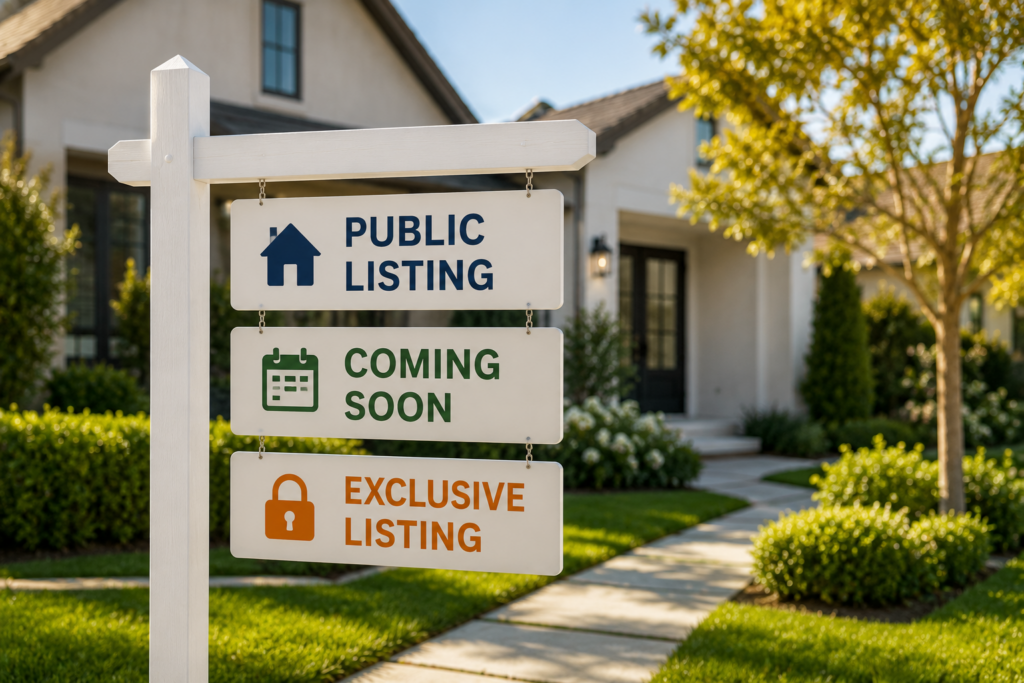
    What Does a Public Listing Mean?

    A traditional public listing is the option most homeowners are familiar with. The property is entered into the Multiple Listing Service and, depending on the seller’s instructions and applicable MLS rules, may also be distributed to consumer facing real estate websites.

    That broad exposure can be important.

    Selling a home is ultimately about connecting a property with potential buyers. The more broadly a home is exposed, the more opportunities buyers and their real estate professionals may have to discover it, evaluate it and potentially make an offer.

    That does not mean that maximum exposure automatically guarantees the highest price. Real estate is much more nuanced than that. Pricing, presentation, property condition, photography, timing and the local market all matter.

    But exposure is an important part of the conversation.

    Why Would a Seller Want More Privacy?

    There are also legitimate reasons why a homeowner might not want immediate public exposure.

    A seller may value privacy. There may be family or personal circumstances involved. Someone may want additional time before a property appears broadly on consumer websites. In other situations, the seller and broker may determine that a different marketing timeline makes sense for that particular property.

    This is where understanding the terminology becomes helpful.

    An Office Exclusive listing, under current National Association of REALTORS® MLS policy, is a listing in which the seller directs that the property not be publicly marketed and not be disseminated through the MLS to other MLS participants and subscribers. The listing is still filed with the MLS, subject to applicable local rules.

    That is a meaningful choice because the seller is choosing not to receive the broad and immediate exposure normally associated with MLS distribution.

    Home sellers may have different marketing options. Understanding how each choice affects timing, privacy and exposure is an important part of deciding how to bring a home to market.

    What About Delayed Marketing?

    There is another option that is important to distinguish from an Office Exclusive.

    Under NAR’s Multiple Listing Options for Sellers policy, a Delayed Marketing Exempt Listing is entered into the MLS and is available to other MLS participants, but public marketing through IDX and syndication is delayed for the period permitted by the local MLS.

    In other words, “not on the public websites yet” does not necessarily mean “not in the MLS.”

    That distinction was one of the reasons I found this subject so valuable at The MLS Summit. Real estate terminology can sound technical, but behind the terminology are decisions that can have very practical consequences for homeowners.

    The Questions I Would Encourage a Seller to Ask

    If a homeowner is considering limiting or delaying the exposure of their property, I think it is important to understand why.

    What is the benefit to the seller?

    Who will be able to see the home during that period?

    Who will not?

    How could this affect the number of buyers who become aware of the property?

    What is the seller gaining in exchange for limiting or delaying broader exposure?

    These are reasonable questions, and they are exactly the kinds of conversations I believe homeowners should feel comfortable having with their real estate professional.

    Current NAR policy reflects the importance of that informed decision. When a seller chooses an exempt listing option such as an Office Exclusive or Delayed Marketing listing, the required disclosure includes acknowledgment that the seller understands the MLS benefits they are waiving or delaying, including broad and immediate exposure through the MLS.

    I think that is an important principle beyond the paperwork itself: the marketing strategy should serve the seller.

    Every Home Deserves Its Own Conversation

    One thing I continue to appreciate about real estate is that two homes in the same neighborhood can require very different strategies.

    That is certainly true here in Pacific Palisades and throughout the Westside of Los Angeles. A seller’s priorities, the condition of the home, the property’s price range, current competition and even the reason for selling can influence how a home should be positioned.

    This is also why I do not think homeowners should feel pressured to choose a particular marketing strategy simply because it is described as exclusive, private or special.

    Sometimes privacy may genuinely be important. Sometimes delaying public marketing may make sense. In other circumstances, broad exposure to the marketplace may better serve the seller’s goals.

    The important thing is understanding the difference and making the choice intentionally.

    My Takeaway From The MLS Summit

    I left The MLS Summit with pages of notes, but one idea keeps coming back to me: homeowners deserve to understand the choices being made on their behalf.

    Technology and real estate marketing will continue to evolve. There will probably be even more ways to market a home in the future. But the responsibility of a real estate professional remains very human: explain the options clearly, answer questions honestly and help the client make an informed decision based on what is best for their situation.

    If you are considering selling a home in Pacific Palisades or elsewhere on the Westside of Los Angeles and you are wondering how your property should be marketed, I am always happy to help you understand the different options. You do not need to know all of the MLS terminology before starting the conversation. That is part of what I am here for.
    With gratitude and a heart of service,

    Claudia Backus, MBA
    California Real Estate Broker | REALTOR®
    Serving Pacific Palisades & the Westside

  • The Pacific Palisades Farmers Market Is Back: A Community Beginning to Bloom Again

    The Pacific Palisades Farmers Market Is Back: A Community Beginning to Bloom Again

    Yesterday felt like another important day in Pacific Palisades.

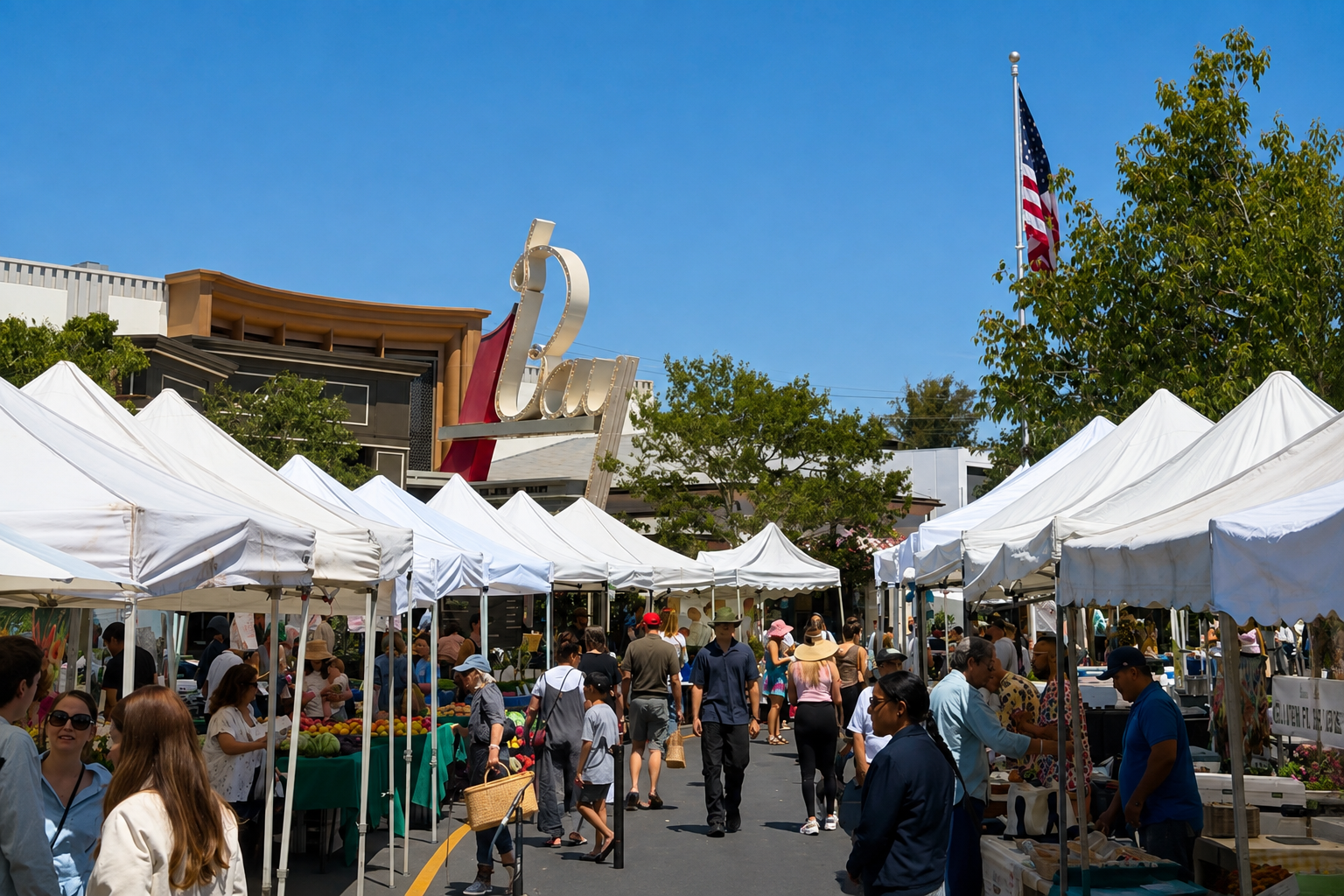
    On Wednesday, August 19, the Pacific Palisades Farmers Market returned to Swarthmore Avenue at Palisades Village for the first time since the January 2025 fire. After everything our community has experienced, seeing those white tents lining the street again meant much more to me than having a place to buy fresh produce and flowers.

    It felt like another little piece of our community coming home.

    Every Reopening Matters in Pacific Palisades

    Since the fire, I have come to appreciate things I probably once took for granted.

    A business reopening matters. A school welcoming students back matters. A familiar gathering place returning matters. And now, having our Farmers Market back every Wednesday matters too.

    Yesterday, the Village was full of people. Schools have started again in the Palisades, so there were children and families walking around. I ran into friends. Rick Caruso was there. There was a big line at Alfred Coffee. For a few hours, there was the wonderful feeling of people simply being together in their neighborhood again.

    I bought a beautiful bouquet of flowers.

    Looking at those flowers later, I thought about how appropriate they seemed for this moment in Pacific Palisades.

    We are not back to what life looked like before the fire. There is still construction everywhere. There is dust. There are empty lots and businesses that have not returned. Many families are still rebuilding their homes and their lives.

    But there are also signs of growth.

    Maybe that is what rebuilding actually looks like. Not one dramatic moment when everything suddenly becomes normal again, but hundreds of smaller moments when something begins to bloom.

    What This Means for Pacific Palisades Real Estate

    As a real estate broker and a longtime resident of Pacific Palisades, I also look at these moments through the lens of our local housing market.

    Real estate is about much more than the structure of a house or the price of a property. People choose communities because of the life surrounding their homes.

    They care about schools, restaurants, coffee shops, parks, local businesses and places where they can run into neighbors. They care about whether a community feels alive and connected.

    That is why the return of a Farmers Market matters for Pacific Palisades real estate too.

    One Farmers Market cannot tell us what home values will do, and I would never suggest that it can. But every business that reopens, every school that welcomes children back and every community tradition that returns helps restore the everyday life that makes a neighborhood a place people want to call home.

    I hope we continue to see more businesses return to the Palisades in the months ahead.

    Sometimes Rebuilding Means Getting Away From Rebuilding

    A few days ago, I did something completely different with my three children.

    I had been meaning to take them to The Gentle Barn in Santa Clarita, and we finally went.

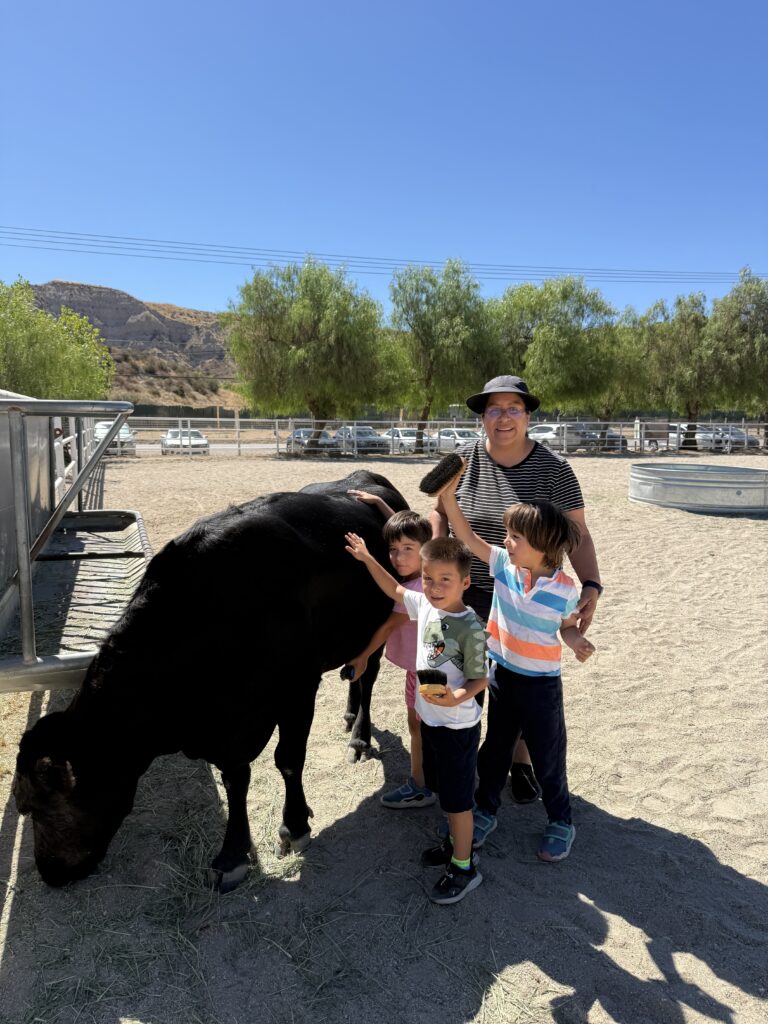
    We spent time with the animals, brushed a cow and, one by one, each of my children hugged her. I did too.

    Taking a little break from rebuilding life in Pacific Palisades and spending a peaceful day with my three children at The Gentle Barn in Santa Clarita.

    There was something wonderfully peaceful about standing next to this enormous, gentle animal.

    For a little while, there were no construction trucks, no construction dust and no conversations about rebuilding. There was just a cow, three children, their mom and a very different kind of afternoon.

    I don’t know exactly how the experience of the fire will stay with my children as they grow older. I don’t know exactly how it will stay with me either.

    But I do know that getting away from our daily surroundings for a few hours felt good.

    And strangely, standing there brushing and hugging a cow made me think about Pacific Palisades.

    Rebuilding Homes and Rebuilding a Community

    In real estate, rebuilding can sound very physical.

    Plans. Permits. Contractors. Foundations. Walls. Roofs. Landscaping.

    Those things are enormously important. We need homes rebuilt.

    But a community is not rebuilt with lumber and concrete alone.

    It is rebuilt when children return to school. When someone opens the doors of a business again. When neighbors stop to talk. When people stand in line for coffee. When farmers put up their tents. When you unexpectedly see a friend while buying vegetables.

    And perhaps it is also rebuilt when a family that has lived through something difficult gives itself permission to leave the construction zone for an afternoon, drive to a barn and hug a cow.

    Yesterday, I came home from the Farmers Market with a bouquet of flowers.

    For me, those flowers are a small reminder of where Pacific Palisades is today.

    We are still rebuilding.

    We are still figuring out what “normal” means now.

    But little by little, our community is beginning to bloom again.

    And I am very grateful to be here to see it.

    With gratitude and a heart of service,

    Claudia Backus, MBA
    California Real Estate Broker | REALTOR®
    Serving Pacific Palisades & the Westside

  • Palisades Village Reopens: What It Means for the Future of Pacific Palisades

    Palisades Village Reopens: What It Means for the Future of Pacific Palisades

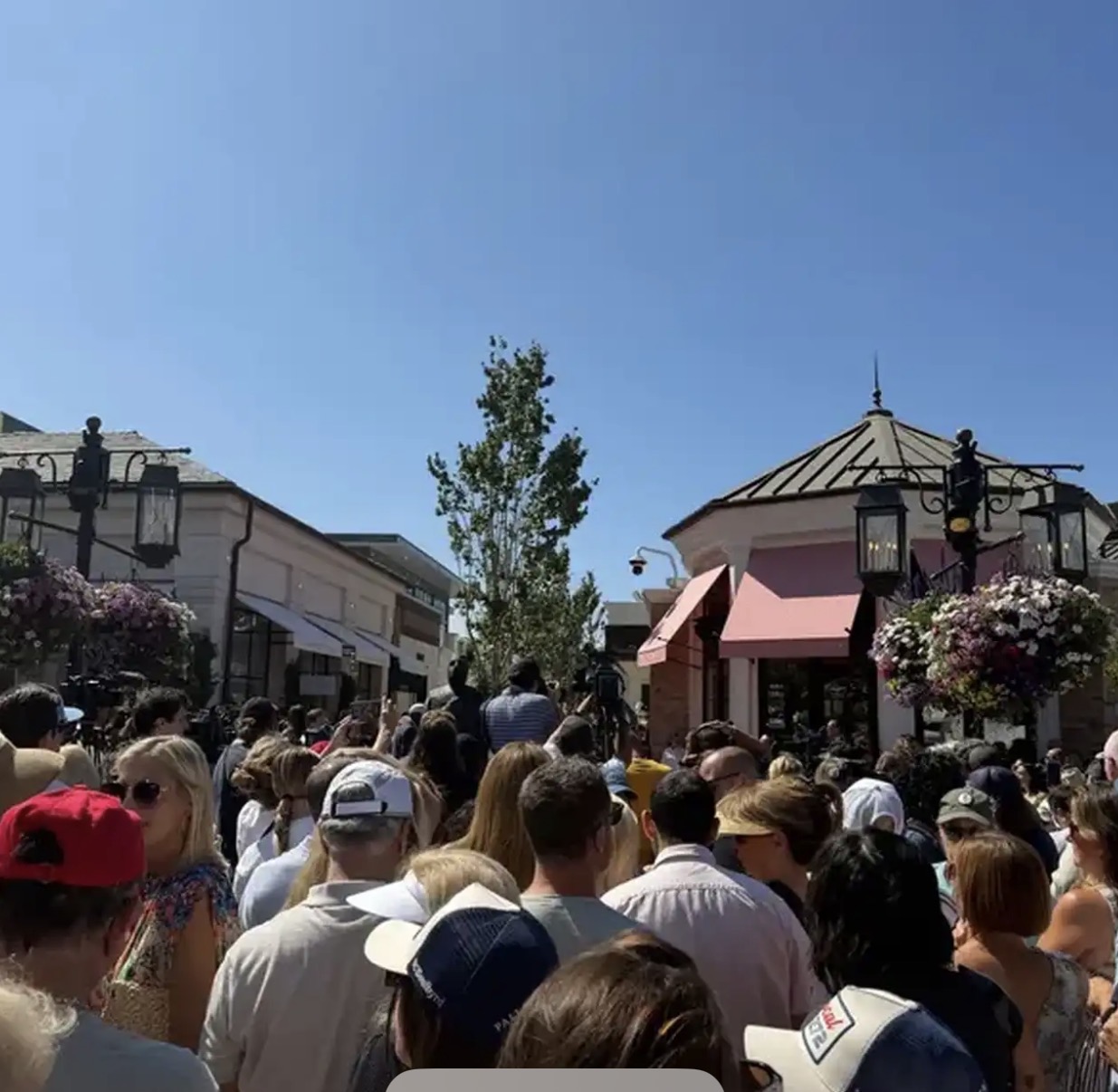
    Yesterday, Saturday, August 15, was a very special day in Pacific Palisades. After being closed for more than 19 months following the devastating Palisades Fire, Palisades Village officially reopened.

    I went to the reopening with my children, and what struck me most was simply seeing people together again. The Village was crowded, there was a flyover overhead, and everywhere I looked I seemed to recognize a familiar face. After everything our community has experienced since January 2025, there was something incredibly encouraging about seeing people walking through the Village again, talking, laughing and enjoying a place that had been such a familiar part of life in the Palisades.

    More Than the Reopening of a Shopping Center

    Palisades Village is, of course, a place to shop and eat, but for those of us who live here, it has also been part of the rhythm of the community. It is a place where you run into neighbors, take your children, meet a friend for coffee or simply walk around.

    That is why yesterday felt significant. The reopening does not mean that the recovery of Pacific Palisades is complete. It isn’t. There are still homes to rebuild, businesses trying to return, families making difficult decisions and enormous amounts of work ahead of us.

    But having an important gathering place in the center of the community reopen feels like another meaningful step forward.

    Rick Caruso and the Caruso team made the decision to restore and reopen Palisades Village after the fire, and yesterday it was wonderful to see that work come to life. Seeing the crowds return was also a reminder that people still care deeply about this community and want to be part of its future.

    “Broken But Together”

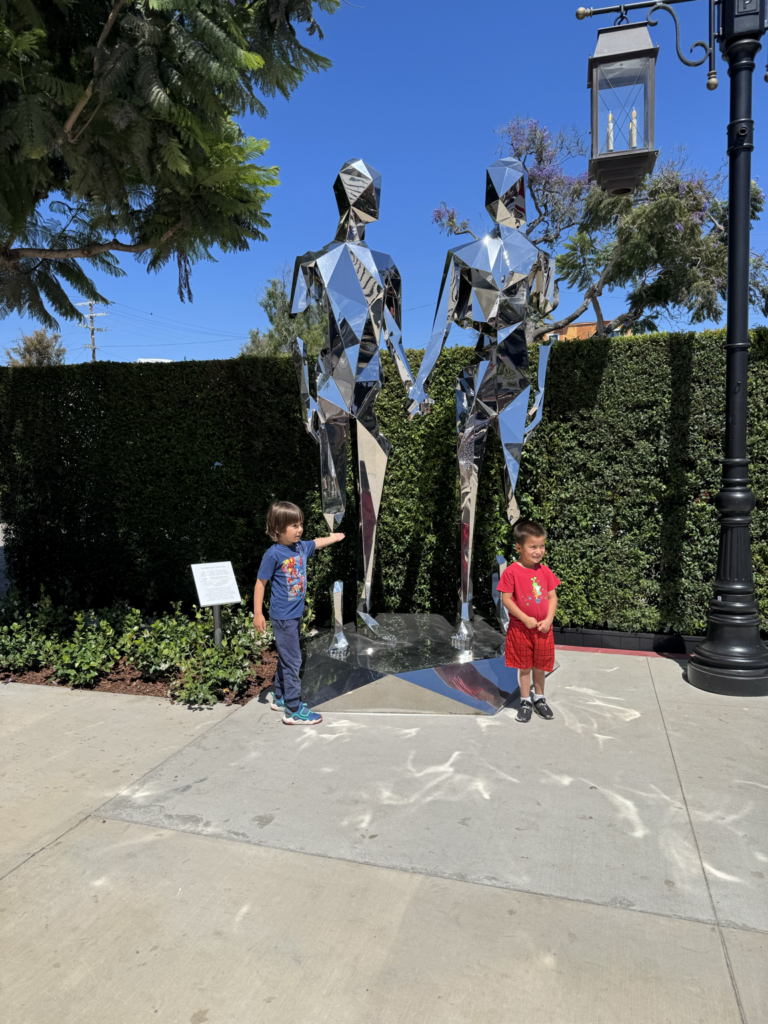
    One of my favorite moments yesterday happened when I took this photograph of my sons, Elon and Enzo, next to a sculpture that is now displayed at Palisades Village.

    My sons, Elon and Enzo, with Michael Benisty’s “Broken But Together” at Palisades Village. The sculpture survived the Palisades Fire and has found a new home in the Village.

    At first, my children were simply fascinated by the two enormous mirrored figures. But after learning the story behind them, the photograph became much more meaningful to me.

    The sculpture, called Broken But Together by artist Michael Benisty, survived the Palisades Fire after the property where it had been displayed was destroyed. It was later recovered and has now been given a home at Palisades Village.

    I love the meaning behind it because it feels especially appropriate here. Pacific Palisades has been through tremendous loss. Rebuilding does not erase what happened, and reopening one part of our community does not mean everything is suddenly back to normal. But piece by piece, familiar parts of our community are returning and new ones are taking their place.

    Yesterday was one of those pieces.

    What Does This Mean for Pacific Palisades Real Estate?

    As a Pacific Palisades resident and real estate broker, I also found myself thinking about what the reopening means for the future of real estate in our community.

    Real estate is about much more than the house itself.

    When someone chooses where to live, they are also choosing the community around that house. They care about the places where they can walk, shop, eat, take their children and spend time with friends. They care about neighborhood businesses, schools, parks, streets and the feeling they get when they drive home.

    That is why the recovery of places such as Palisades Village matters to Pacific Palisades real estate.

    It would be far too simplistic to say that the reopening of the Village automatically means home values will rise. Real estate values are influenced by many factors, and the Palisades is still navigating an unprecedented rebuilding process.

    What I do believe is that the return of businesses, gathering places and everyday community life is an encouraging sign for the long term future of Pacific Palisades. A healthy real estate market depends in part on people wanting to live in a community, and yesterday was a powerful reminder of how many people still believe in this one.

    A flyover above Pacific Palisades during the Palisades Village reopening celebration on August 15, 2026.

    Looking Ahead at Pacific Palisades

    There will be many more milestones ahead.

    Some will be large and highly visible, like the reopening of Palisades Village. Others will happen quietly, one property at a time, when a family receives a permit, construction begins on a home, a business reopens or someone finally gets to return.

    For homeowners considering whether to rebuild, sell or stay in Pacific Palisades, there are still complicated questions ahead. The answers will be different for every family. I think it is important to be realistic about that while also recognizing the progress happening around us.

    Yesterday, I saw a lot of that progress in one place.

    I saw familiar faces. I saw neighbors gathering again. I watched my boys explore a place that will become part of their own memories of growing up in Pacific Palisades. And standing there with my kids next to Broken But Together, I was reminded that rebuilding a community is not something that happens all at once.

    It happens piece by piece.

    I am grateful to everyone who has worked to bring this part of our community back, and I am hopeful about what comes next for Pacific Palisades.

    With gratitude and a heart of service,

    Claudia Backus, MBA
    California Real Estate Broker | REALTOR®
    Serving Pacific Palisades & the Westside

  • What Is Pacific Palisades Becoming? A Real Estate Broker’s View From Inside the Community

    What Is Pacific Palisades Becoming? A Real Estate Broker’s View From Inside the Community

    By Claudia Backus, MBA | California Real Estate Broker | REALTOR®

    I have called Pacific Palisades home for close to two decades, but January 7, 2025 changed what “home” means to me. That morning I went to work in Santa Monica while my three young children went to preschool in Venice, just like any other day. By the end of that day, our lives had changed in ways I could never have imagined.

    The Palisades Fire partially damaged our home and displaced my children and me for 16 months. What I thought would be a temporary interruption became more than a year of waiting, repairing and trying to create some sense of normal life for three little children who simply wanted to know when they could go home.

    The Palisades Fire, January 2025. Photo from my personal collection.

    In the beginning, my children did not understand why we couldn’t just go home, sleep in our own beds or play with their toys. For a while, I told them we were on vacation.

    Eventually, I wanted to be honest with them in a way they could understand. I explained that there had been a big fire in Pacific Palisades and that lots of “Bob the Builders,” as we called them, were coming to help turn off the fires and rebuild our beautiful community one home at a time. They understood as much as small children could. But for months, when I picked them up from school, they would ask me the same simple question: “Mom, which house are we going to today?”

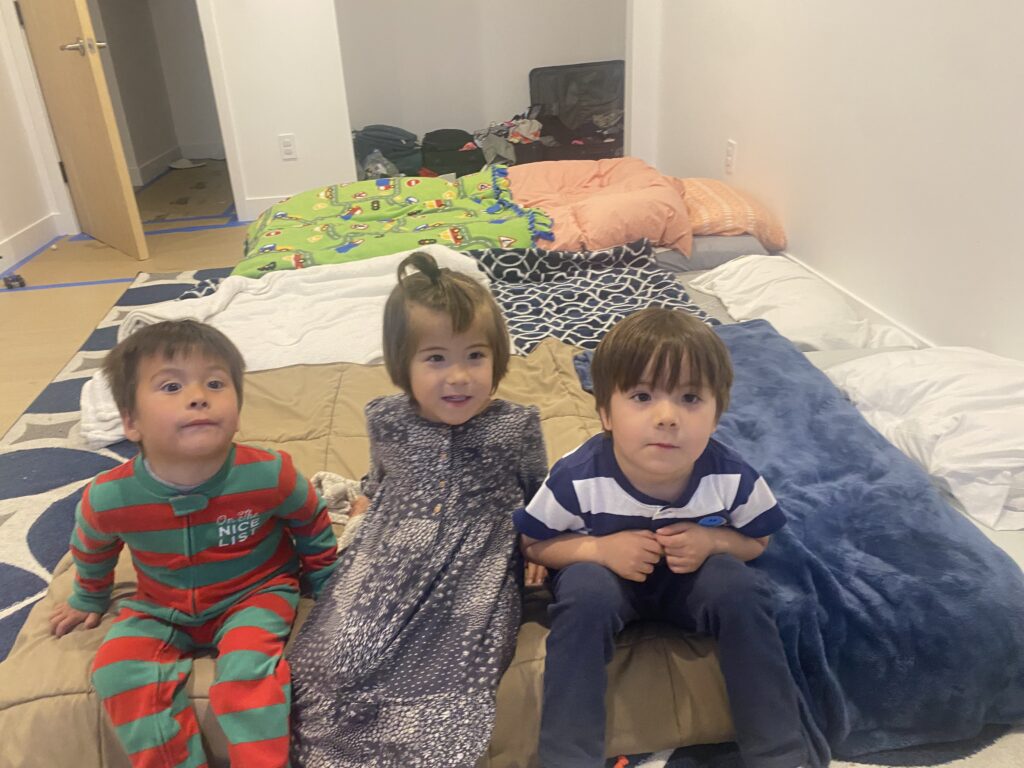
    Our “home” in Westwood for about 16 months. Three mattresses on the floor and donated clothes for the four of us.

    A Season of Incredible Kindness

    There was a time during those months when I felt homeless and hopeless. We slept together on mattresses on the floor. We wore donated clothing. My children played with donated toys. We ate food generously provided by the YMCA and other organizations helping families affected by the fire.

    At the same time, I witnessed something I will never forget. Friends, family, churches, nonprofits, local organizations and complete strangers stepped forward to help. They brought food, clothes, gift cards, school supplies and emotional support. Professionals donated their time and shared their knowledge. People checked on us and on one another.

    During the same period that we lost the ability to live in our home, I also lost my job. I have always been a very independent person, and asking for help did not come naturally to me. But there came a point when I had to accept that I needed help, and I stopped feeling ashamed about asking for it.

    That experience changed me. I started noticing the good in people much more than I noticed the bad. I became less interested in things and more interested in experiences and memories with my children. I became more grateful for ordinary days, because after you spend months wondering when you will be able to go home again, an ordinary day at home feels pretty extraordinary.

    Most importantly, I wanted my children to learn from what had happened to us. I wanted them to see that difficult things happen in life, but that we can keep moving forward. I wanted them to learn kindness and gratitude through our actions, not simply because I told them those things were important.

    Coming Back to Pacific Palisades

    When we finally came home after 16 months, I returned to the same community, but I saw it differently.

    There are still many empty lots throughout Pacific Palisades. Some streets are filled with construction trucks and workers. There is dust. There are nails and debris on the roads. I have already had two tires damaged by nails since coming back. Rebuilding an entire community is messy, noisy and inconvenient.

    But when I drive through Pacific Palisades, that is not all I see. I see homes being rebuilt. I see businesses trying to recover. I see neighbors sharing information and helping each other navigate insurance, permits and construction. I see coalitions, nonprofits, churches and community organizations continuing to offer resources even long after the fire.

    There are free community events, mental health resources, exercise classes, informational meetings and conversations about rebuilding and recovery. Accountants, attorneys and other professionals have volunteered their knowledge and, in some cases, their services.

    And there is something special about seeing another family come home. We celebrate comeback stories because we understand what it took to get there. I find myself wanting to read local Pacific Palisades news because these stories are about people and places I recognize. They are about our neighbors and our community.

    Of course, not everyone has experienced the aftermath of the fire in the same way. There is frustration, sadness and anger too, and understandably so. Families lost homes, belongings, businesses, jobs and a sense of security. Some people are still waiting for answers and making very difficult decisions about what comes next.

    This is simply what I have noticed through my own experience. Maybe going through the fire changed what I choose to notice.

    Rebuilding Is About More Than Houses

    Since returning, I have also become much more intentional about where I spend my money. If I can buy groceries in Pacific Palisades, I do. If I am meeting someone for coffee, I try to meet them here. When I need a gift, I like buying gift cards from local businesses.

    These are small decisions, but I now understand that rebuilding Pacific Palisades is about much more than rebuilding houses. A community also needs its restaurants, coffee shops, stores, schools, churches, organizations and local businesses. It needs families walking around again. It needs children playing. It needs people spending money locally. It needs people who believe there is a future here.

    That brings me to something I think about often now: What is Pacific Palisades becoming?

    I don’t think anyone knows the complete answer yet.

    What Does This Mean for Pacific Palisades Real Estate?

    As a California real estate broker and a Pacific Palisades resident, I look around and see a real estate market going through something very unusual.

    There are homeowners who are determined to rebuild. There are others who may decide that after everything they have been through, they simply cannot or do not want to go through a lengthy rebuilding process. Some may decide to sell their lots.

    Some families will come back. Some will decide to stay in the communities where they lived while displaced. Some may sell surviving homes and start somewhere new.

    At the same time, there are buyers who want to live in Pacific Palisades and investors looking at vacant lots, new construction and opportunities created by a neighborhood that will be changing for years.

    Every one of those decisions becomes part of the future real estate landscape of Pacific Palisades.

    An empty lot is not just an empty lot. Behind it may be a family trying to decide whether to rebuild the home they loved, sell the property, wait, or take their lives in a completely different direction.

    A new house being built is not simply new construction. It is another piece of a neighborhood coming back. And someone buying a home or lot here today is buying into a community that is still rebuilding around them.

    That means buyers need to ask different questions. What is being rebuilt nearby? How might years of construction affect a particular street? What should they understand about insurance? What is planned for surrounding lots?

    Sellers have different questions too. Should they rebuild before selling? Should they sell the lot? What is the land worth today? Who is buying? What are other properties actually selling for? What options do they have if they want MLS exposure but do not need traditional full service representation?

    There is no single answer that is right for everyone. And I think that is exactly why good real estate guidance matters right now.

    The Fire Changed My Why

    The fire changed many things in my life, including why I want to use my real estate experience and knowledge to serve others. My purpose as an independent real estate broker is to help people understand their options and make informed real estate decisions, especially during a time when so many families and property owners in our community are deciding what comes next.

    I am an independent real estate broker, but I am also a mom raising three children in Pacific Palisades. I shop here. I drive these streets. I see the construction. I see the empty lots. I see families coming back. I also know what it feels like to wonder when, or if, life will ever feel normal again.

    My goal is not to tell every homeowner that they should sell or every buyer that they should buy. My goal is to serve people by helping them understand their real estate options.

    That might mean helping a homeowner sell a house or vacant lot. It might mean helping someone understand what similar properties have sold for before deciding what to do. It might mean helping a buyer find a home here. It might mean working with an investor who sees an opportunity to build. And because I am an independent broker, I can offer different levels of real estate service and pricing depending on what a client actually needs.

    That is also one of the reasons I am starting this blog. I want to write about the real questions people are asking about real estate in Pacific Palisades and the Westside. I want to research those questions, explain what I learn in plain English and share information that can help homeowners, buyers and investors make informed decisions.

    I don’t know exactly what Pacific Palisades will look like five or ten years from now. But I know what I see today.

    I see empty lots next to homes where families have returned. I see construction crews rebuilding one property at a time. I see local businesses trying to make it. I see neighbors checking on neighbors. I see families celebrating when they finally come home.

    And when I look at my own three children sleeping in their own beds again, surrounded by their own toys, I understand just how much the word “home” can mean.

    After almost two decades of living in Pacific Palisades, I thought I already knew this community. It took losing our home for 16 months to make me realize how much this community truly feels like home.

    Claudia Backus, MBA
    California Real Estate Broker | REALTOR®
    Pacific Palisades, California

    If you are thinking about buying or selling a home or lot in Pacific Palisades or the Westside, or you simply do not know what your next real estate step should be, I am happy to talk through your options with you.