Tag: Los Angeles Real Estate

  • What Is a Contingency in a Real Estate Offer? What California Home Sellers Should Understand

    What Is a Contingency in a Real Estate Offer? What California Home Sellers Should Understand

    Receiving an offer on your home can be exciting, especially when the price looks good. It is natural for a seller’s attention to go immediately to that number, but the purchase price is only one part of an offer.

    The terms of the offer matter too, and contingencies are among the terms sellers should understand before deciding how strong an offer really is.

    A contingency generally gives a buyer the ability to move forward with the purchase subject to certain conditions. Depending on the terms of the contract, those conditions may involve the buyer’s investigation of the property, financing, an appraisal, or other circumstances addressed in the agreement.

    For a seller, understanding those contingencies can make it easier to evaluate an offer as a whole rather than looking at the purchase price alone.

    Why Contingencies Matter to a Seller

    When a seller accepts an offer, the transaction begins moving toward closing, but that does not necessarily mean every uncertainty has disappeared.

    A buyer may still have important steps to complete during the transaction. The buyer may investigate the condition of the property, work with a lender to obtain financing, or have the property appraised.

    The specific rights and obligations of the parties depend on the contract they sign, which is why sellers should pay attention not only to whether an offer contains contingencies, but also to what those contingencies actually say and how much time is provided for them.

    An offer with a higher price is not automatically the strongest offer if other terms create substantially more uncertainty for the seller.

    An Investigation Contingency Can Give the Buyer Time to Learn More About the Property

    Buying a home is a significant financial decision, and buyers commonly want an opportunity to investigate the property.

    Depending on the transaction and the contract, this period may involve inspections or other investigations that help the buyer learn more about the home’s condition.

    Sellers sometimes hear the word inspection and assume the purpose is simply to create a list of repairs. In reality, the investigation period can be much broader. It gives a buyer an opportunity to gather information about the property and make decisions based on what is discovered, subject to the terms of the agreement.

    For the seller, the important point is to understand what the contract allows, the applicable deadlines, and what may happen if an issue is discovered.

    Financing Is Another Important Part of an Offer

    When a buyer is obtaining a loan to purchase the property, financing can be an important part of the transaction.

    A buyer may appear financially strong and may even have a lender’s preapproval, but a preapproval is not the same as a completed loan. The lender may still need to review documents, verify information, evaluate the property, and complete its underwriting process.

    This is one reason sellers should look beyond the offer price and consider the buyer’s financing terms as part of the overall offer.

    The amount of the down payment, the type of financing, the contingency terms, and the time provided for the buyer to complete certain steps can all be relevant when evaluating the transaction.

    The Appraisal Can Matter When Financing Is Involved

    An appraisal is another part of many financed real estate transactions.

    The lender generally wants an independent opinion of the property’s value because the property is being used as security for the loan. If the appraisal supports the purchase price, this part of the process may proceed without much attention from the seller.

    If the appraised value comes in below the purchase price, however, the situation can become more complicated.

    What happens next depends on the contract, the financing, and the decisions made by the parties. The buyer and seller may need to consider their options based on the specific circumstances of the transaction.

    This is another example of why the highest purchase price on paper does not tell the entire story.

    Fewer Contingencies Do Not Automatically Mean the Best Offer

    From a seller’s perspective, an offer with fewer uncertainties may initially appear more attractive. However, it is important not to evaluate an offer based on one term alone.

    Purchase price, financing, deposit, contingency periods, closing date, possession, and other terms can all contribute to the overall strength of an offer.

    The seller’s priorities matter as well.

    A seller who needs a particular closing date may evaluate two offers differently from a seller whose primary goal is maximizing price. Another seller may place greater importance on the likelihood of the transaction reaching closing without unnecessary complications.

    There is no universal formula that identifies the best offer for every homeowner.

    Real estate appraiser evaluating the exterior of a Los Angeles home as part of the home purchase process.
    An appraisal can be an important part of a financed home purchase because the lender generally wants an independent opinion of the property’s value.

    Pay Attention to the Deadlines

    Real estate contracts contain important dates and deadlines, and contingency periods can be among them.

    Once an offer is accepted, both buyers and sellers should understand what is expected during the transaction and when certain actions are supposed to occur.

    A seller does not need to memorize every provision of a real estate contract before putting a home on the market. However, when an offer arrives, it is worth slowing down enough to understand the terms before making a decision.

    A purchase agreement is a contract, not simply a statement of how much someone is willing to pay for the house.

    Look at the Entire Offer Before Making a Decision

    It can be tempting to compare offers by putting the prices next to each other and choosing the largest number. In reality, evaluating an offer requires a more complete picture.

    The price matters, but so do the contingencies, financing, timelines, deposit, closing terms, and the seller’s own priorities.

    Understanding those pieces does not mean a seller needs to become an expert in real estate contracts. It means asking questions and understanding what is being agreed to before signing.

    When an offer arrives, the goal should not simply be to find the highest number. It should be to understand the entire offer and make an informed decision about which terms make the most sense for the seller and the property.

    With gratitude and a heart for service,

    Claudia Backus, MBA
    California Real Estate Broker
    REALTOR®
    Serving Pacific Palisades & the Westside of Los Angeles

  • Should You Make Repairs Before Selling Your Home? What Los Angeles Sellers Should Consider

    Should You Make Repairs Before Selling Your Home? What Los Angeles Sellers Should Consider

    One of the questions homeowners often face before putting a property on the market is whether they should make repairs first or simply sell the home in its current condition.

    It sounds like a simple decision, but it rarely is. Some repairs can make a home easier to sell and help buyers feel more comfortable with the property. Other improvements may cost far more than they ultimately contribute to the sale. In Los Angeles, where buyers can encounter everything from beautifully renovated homes to properties that have not been updated in decades, there is no single answer that works for every seller.

    The better question may be: Which repairs actually matter for this particular home, in this particular market, and for the buyers most likely to purchase it?

    Start With the Difference Between Repairs and Improvements

    Repairs and improvements are not necessarily the same thing.

    A repair addresses something that is damaged, broken, leaking, unsafe, or not functioning properly. An improvement changes or upgrades the home, such as replacing an older kitchen that still works with a brand new one.

    That distinction matters because sellers can easily begin with a short repair list and suddenly find themselves considering new countertops, new flooring, new appliances, new landscaping, and an entire list of cosmetic upgrades.

    Before spending that money, it is important to understand what problem you are actually trying to solve.

    If a leaking faucet, broken door, damaged wall, or nonfunctioning light fixture can be repaired relatively easily, taking care of it may prevent a buyer from wondering what else has been neglected. A major renovation, however, requires a much more careful analysis.

    Buyers Notice the Small Things Too

    When homeowners have lived in a property for many years, they naturally become accustomed to its little imperfections. A door that sticks, a cabinet handle that is loose, or a light switch that does not work may barely register anymore.

    A buyer is seeing the home for the first time.

    Small visible problems can sometimes influence the way a buyer perceives the rest of the property. One minor issue is usually just a minor issue, but several of them together can create the impression that the home has not been well maintained.

    This does not mean a house needs to be perfect before it can be sold. It simply means that relatively inexpensive repairs may deserve attention when they improve the overall impression of care.

    Be Careful About Renovating for Someone Else

    One of the biggest risks sellers face is spending significant money creating a home that reflects their own taste rather than the future buyer’s.

    Imagine spending thousands of dollars choosing new flooring, fixtures, or finishes only to discover that the eventual buyer would have preferred something completely different.

    This can be particularly important with kitchens and bathrooms because renovations can become expensive very quickly. A seller may assume that a new kitchen will automatically increase the sale price by at least the amount spent on the renovation, but real estate does not always work that way.

    The value of an improvement depends on many factors, including the neighborhood, the property’s price range, the quality of the work, the current competition, and what buyers in that particular market expect.

    Sometimes the better decision is to allow buyers to see the home’s potential and make their own choices after purchasing it.

    Homeowner reviewing repair notes while walking through a bright Los Angeles home before listing it for sale.
    Thoughtful repairs can improve the way a home presents to buyers, but sellers do not necessarily need to renovate everything before putting a property on the market.

    Consider How Your Home Compares With the Competition

    The condition of competing homes matters.

    If buyers looking in your neighborhood are primarily seeing renovated properties and your home requires significant work, condition may affect both the price buyers are willing to pay and the way the property should be positioned.

    On the other hand, an older home does not automatically need to be transformed into a newly renovated one before it can compete.

    Some buyers specifically look for homes they can personalize. Others may value the location, lot, floor plan, architectural character, or potential more than updated finishes.

    This is why decisions about repairs should not be made in isolation. Looking at comparable properties can help a seller understand what buyers are currently seeing and what they may expect at a particular price.

    Think About the Seller’s Priorities Too

    The best decision is not based only on the house. It also depends on the seller.

    One homeowner may have the time, money, and desire to complete repairs before listing. Another may need to sell quickly and prefer not to manage contractors or take on additional expenses.

    Those are both legitimate considerations.

    Selling a home is not simply an exercise in achieving the highest theoretical price. Sellers also have to consider timing, convenience, available cash, stress, and what makes sense for their individual circumstances.

    Sometimes preparing a property more extensively is worthwhile. Sometimes selling it in its current condition is the more practical choice.

    Get Information Before You Start Spending

    Before beginning a long list of projects, it can be helpful to first understand how the home is likely to compete in the current market.

    Which issues are likely to matter to buyers? Which ones are mostly cosmetic? Are there relatively simple repairs that could improve the home’s presentation? Would a major renovation make financial sense, or would the seller be better served by adjusting the pricing strategy?

    These questions are easier to answer when the property’s condition is considered alongside comparable sales, current listings, buyer expectations, and the seller’s own goals.

    A home does not have to be perfect to be marketable, and sellers should not assume that every dollar spent before a sale will automatically come back to them.

    The goal is not necessarily to fix everything. It is to make thoughtful decisions about what is worth addressing and what may be better left for the next owner.

    With gratitude and a heart for service,

    Claudia Backus, MBA
    California Real Estate Broker
    REALTOR®
    Serving Pacific Palisades & the Westside of Los Angeles

  • The Pacific Palisades Farmers Market Is Back: A Community Beginning to Bloom Again

    The Pacific Palisades Farmers Market Is Back: A Community Beginning to Bloom Again

    Yesterday felt like another important day in Pacific Palisades.

    On Wednesday, August 19, the Pacific Palisades Farmers Market returned to Swarthmore Avenue at Palisades Village for the first time since the January 2025 fire. After everything our community has experienced, seeing those white tents lining the street again meant much more to me than having a place to buy fresh produce and flowers.

    It felt like another little piece of our community coming home.

    Every Reopening Matters in Pacific Palisades

    Since the fire, I have come to appreciate things I probably once took for granted.

    A business reopening matters. A school welcoming students back matters. A familiar gathering place returning matters. And now, having our Farmers Market back every Wednesday matters too.

    Yesterday, the Village was full of people. Schools have started again in the Palisades, so there were children and families walking around. I ran into friends. Rick Caruso was there. There was a big line at Alfred Coffee. For a few hours, there was the wonderful feeling of people simply being together in their neighborhood again.

    I bought a beautiful bouquet of flowers.

    Looking at those flowers later, I thought about how appropriate they seemed for this moment in Pacific Palisades.

    We are not back to what life looked like before the fire. There is still construction everywhere. There is dust. There are empty lots and businesses that have not returned. Many families are still rebuilding their homes and their lives.

    But there are also signs of growth.

    Maybe that is what rebuilding actually looks like. Not one dramatic moment when everything suddenly becomes normal again, but hundreds of smaller moments when something begins to bloom.

    What This Means for Pacific Palisades Real Estate

    As a real estate broker and a longtime resident of Pacific Palisades, I also look at these moments through the lens of our local housing market.

    Real estate is about much more than the structure of a house or the price of a property. People choose communities because of the life surrounding their homes.

    They care about schools, restaurants, coffee shops, parks, local businesses and places where they can run into neighbors. They care about whether a community feels alive and connected.

    That is why the return of a Farmers Market matters for Pacific Palisades real estate too.

    One Farmers Market cannot tell us what home values will do, and I would never suggest that it can. But every business that reopens, every school that welcomes children back and every community tradition that returns helps restore the everyday life that makes a neighborhood a place people want to call home.

    I hope we continue to see more businesses return to the Palisades in the months ahead.

    Sometimes Rebuilding Means Getting Away From Rebuilding

    A few days ago, I did something completely different with my three children.

    I had been meaning to take them to The Gentle Barn in Santa Clarita, and we finally went.

    We spent time with the animals, brushed a cow and, one by one, each of my children hugged her. I did too.

    Taking a little break from rebuilding life in Pacific Palisades and spending a peaceful day with my three children at The Gentle Barn in Santa Clarita.

    There was something wonderfully peaceful about standing next to this enormous, gentle animal.

    For a little while, there were no construction trucks, no construction dust and no conversations about rebuilding. There was just a cow, three children, their mom and a very different kind of afternoon.

    I don’t know exactly how the experience of the fire will stay with my children as they grow older. I don’t know exactly how it will stay with me either.

    But I do know that getting away from our daily surroundings for a few hours felt good.

    And strangely, standing there brushing and hugging a cow made me think about Pacific Palisades.

    Rebuilding Homes and Rebuilding a Community

    In real estate, rebuilding can sound very physical.

    Plans. Permits. Contractors. Foundations. Walls. Roofs. Landscaping.

    Those things are enormously important. We need homes rebuilt.

    But a community is not rebuilt with lumber and concrete alone.

    It is rebuilt when children return to school. When someone opens the doors of a business again. When neighbors stop to talk. When people stand in line for coffee. When farmers put up their tents. When you unexpectedly see a friend while buying vegetables.

    And perhaps it is also rebuilt when a family that has lived through something difficult gives itself permission to leave the construction zone for an afternoon, drive to a barn and hug a cow.

    Yesterday, I came home from the Farmers Market with a bouquet of flowers.

    For me, those flowers are a small reminder of where Pacific Palisades is today.

    We are still rebuilding.

    We are still figuring out what “normal” means now.

    But little by little, our community is beginning to bloom again.

    And I am very grateful to be here to see it.

    With gratitude and a heart of service,

    Claudia Backus, MBA
    California Real Estate Broker | REALTOR®
    Serving Pacific Palisades & the Westside

  • What Is a CMA in Real Estate? What Los Angeles Homeowners Should Know Before Selling

    What Is a CMA in Real Estate? What Los Angeles Homeowners Should Know Before Selling

    If you are thinking about selling your home, you have probably asked some version of the question, “What is my house worth?” Today, homeowners can find estimates online in seconds, but understanding how a home fits into the current market usually requires more than one automated number.

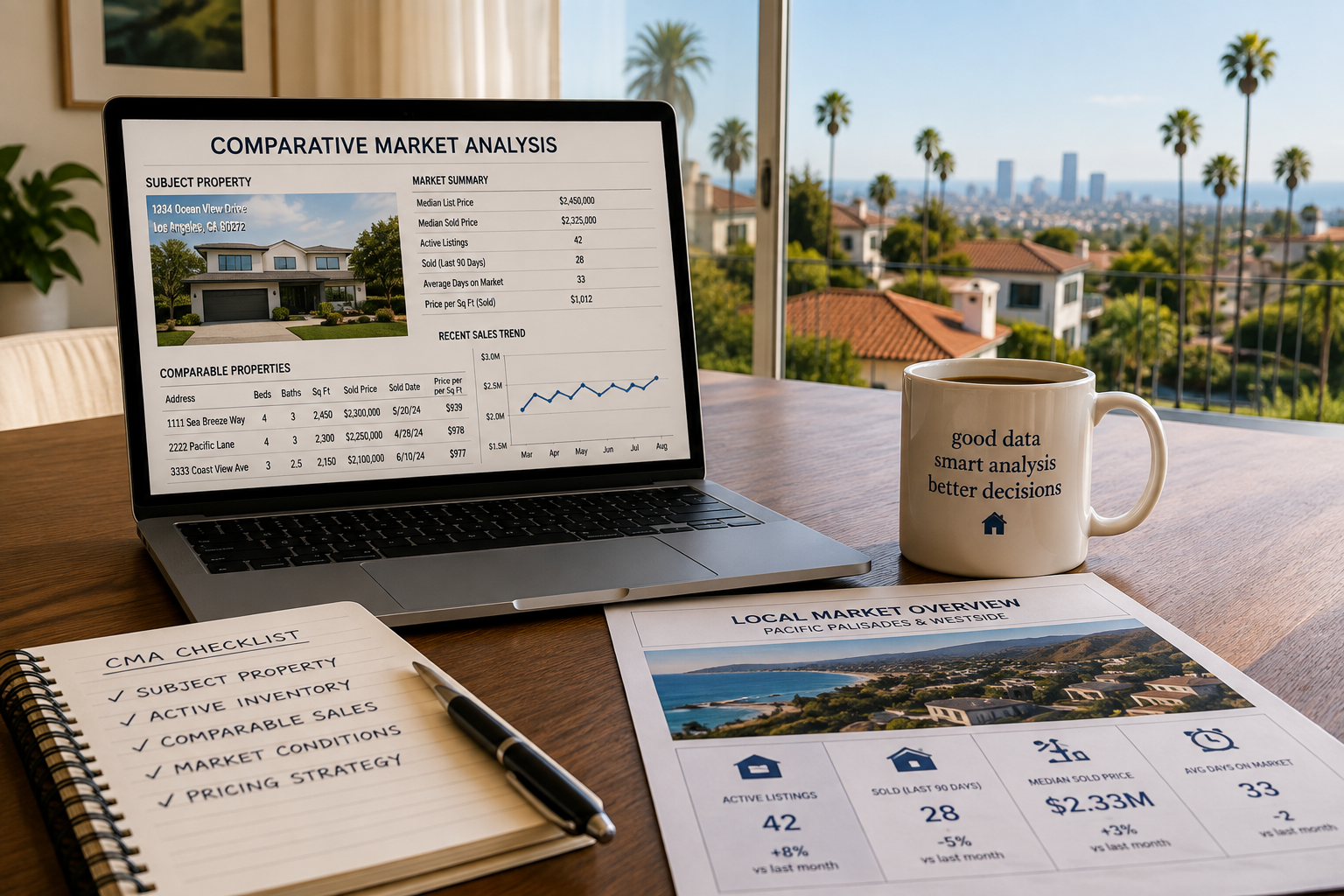
    A Comparative Market Analysis, commonly called a CMA, is one of the tools real estate professionals use to help answer that question. A thoughtful CMA looks at relevant properties, current market conditions, active competition, and the characteristics of a specific home to help a homeowner understand a reasonable pricing range and begin thinking about a selling strategy.

    As a mom of three young children, the word “homework” has taken on a whole new meaning in my life. But there is another kind of homework I have come to appreciate in real estate: the work that should happen before advising someone about the value and pricing of their home. To me, a good CMA is exactly that kind of homework.

    What Is a CMA in Real Estate?

    A CMA is an analysis of comparable properties and market conditions used to help estimate how a home may compete in the current real estate market. It usually includes recent sales, but a good analysis goes beyond finding a few homes nearby and averaging their sale prices.

    The goal is to identify properties that are meaningfully comparable and then understand the differences. Location, size, condition, renovations, lot characteristics, views, layout, privacy, and other property specific details can all affect how buyers perceive value. Two homes can be close to one another and still compete very differently in the market. This is one reason I believe a CMA should be researched rather than simply generated. The data matters, but so does deciding which data is actually relevant.

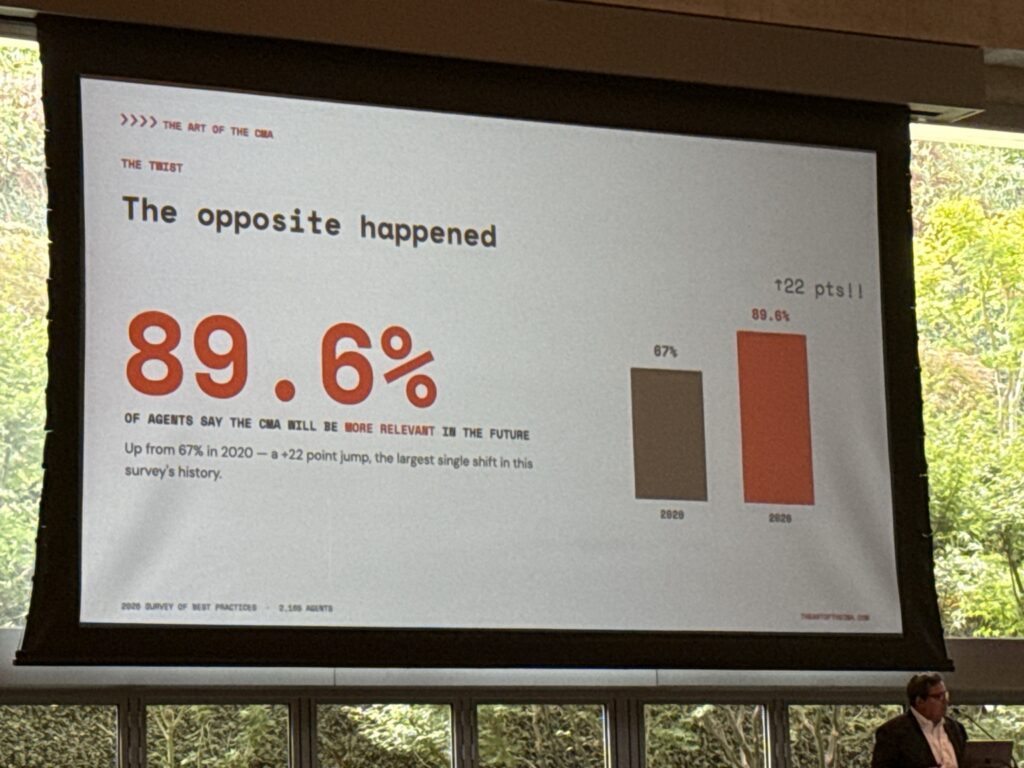
    One statistic that caught my attention at The MLS Summit 2026 was how strongly real estate professionals continue to value the CMA, even as consumers have access to more online home valuation tools.

    Why Does a CMA Still Matter When We Have Online Home Estimates?

    Homeowners now have access to more real estate information than ever before, and I think that is a good thing. Online valuation tools can be useful as a starting point, and artificial intelligence is creating even more ways to organize and analyze information. I use technology myself and enjoy learning how these tools can help us work more intelligently.

    But an estimate and an analysis are not quite the same thing. An automated tool may not fully understand a remodeled kitchen, an unusual floor plan, the quality of a view, the condition of a property, or why buyers may respond differently to two homes that look similar on paper. A CMA gives us an opportunity to look at the data in the context of the actual property and the market around it.

    That distinction became even clearer to me at The MLS Summit 2026. As public real estate data and AI tools continue to grow, I do not think the professional role becomes less important. I think the responsibility shifts toward understanding the information, verifying it, interpreting it carefully, and explaining it clearly to the homeowner.

    A CMA Is More Than Looking at Sold Homes

    One of my favorite practical takeaways from the Summit was the importance of looking closely at active inventory. Sold properties tell us what buyers were willing to pay in the recent past, which is important, but active listings tell us what a buyer can choose today.

    If you are preparing to sell, your home is not only being compared with properties that sold three months ago. It will compete with the homes buyers can tour and consider right now. Understanding that active competition can help put pricing, condition, presentation, and strategy into perspective.

    This is also where the idea of a micro market matters. Asking “How is the Los Angeles market?” is often too broad to be very useful for one homeowner. The more helpful question is: what is happening in the particular market in which this particular home will compete? Price range, neighborhood, property type, size, condition, and buyer expectations can create very different markets within the same city.

    A Home Is Not Just a Collection of Data

    A CMA depends on data, but a home is not simply a collection of numbers. This is where professional judgment and local context become important. How does the home compare with the competition buyers are seeing right now? Which comparable properties are truly comparable? Does a renovation add the value a homeowner expects it to add? How might buyers respond to the condition, layout, lot, view, privacy, or location?

    Those questions do not mean the data is less important. They mean the data needs to be interpreted. A good CMA should help a homeowner understand not only what the numbers say, but why certain properties are more relevant than others and what those comparisons may mean for the home’s position in the market.

    Pricing Can Be Personal

    Pricing a home is both analytical and personal. For many homeowners, a house represents far more than an investment. It may be where children grew up, where holidays were celebrated, where years of improvements were made, or simply a place filled with memories. It makes sense that conversations about value can carry emotion.

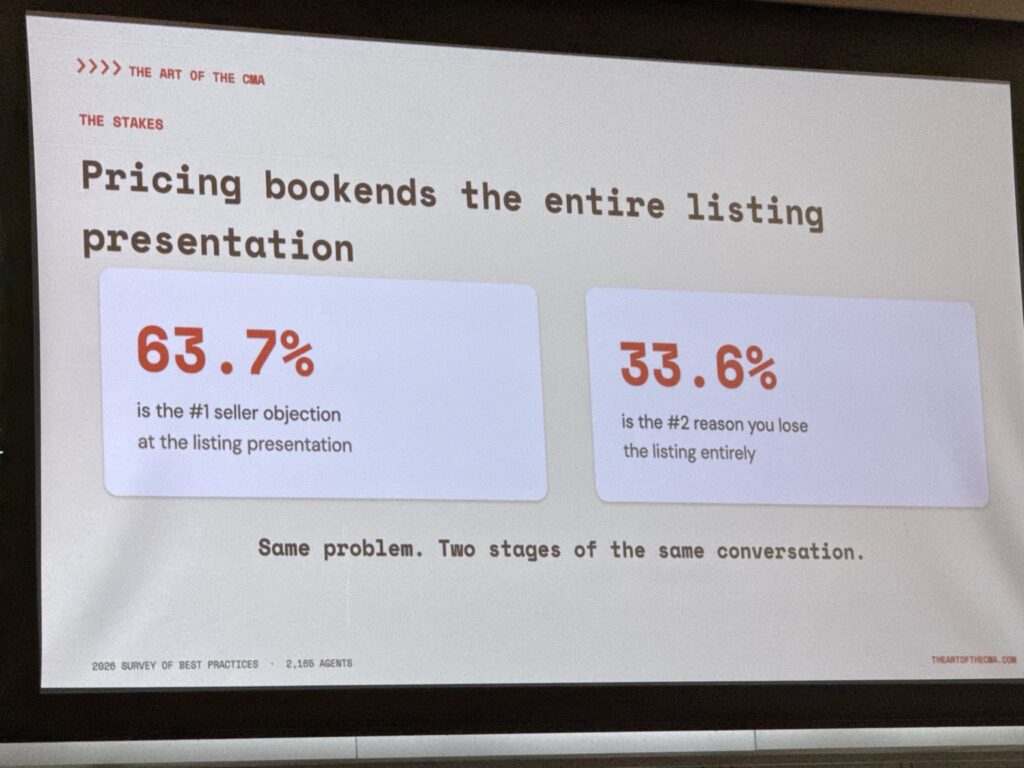
    Pricing was a major theme during the CMA discussion at The MLS Summit 2026. The presentation shared survey data showing that pricing was the number one seller objection at a listing presentation, reported by 63.7 percent of surveyed agents. I do not interpret that statistic as homeowners being difficult. I see it as a reminder of how important it is for a real estate professional to arrive prepared and be able to explain the evidence behind a pricing recommendation.

    Pricing was an important part of the CMA discussion at The MLS Summit 2026. A thoughtful CMA can give homeowners an evidence based starting point for understanding how their home fits into the current market.

    A CMA Is a Starting Point for a Conversation

    I do not think the purpose of a CMA is to walk into someone’s home, announce a number, and end the conversation. The more useful approach is to walk through the information together. Which properties were selected as comparables? Why were they selected? What is currently competing for buyers’ attention? Where is the subject property stronger or weaker? What has changed in the market?

    The homeowner’s goals matter too. One seller may prioritize achieving the highest possible price and have flexibility with timing. Another may need to move within a certain period. Someone else may value privacy, simplicity, or certainty. The market data helps inform the strategy, but the strategy should also reflect the person making the decision.

    That is why I like thinking of a CMA as the beginning of a thoughtful pricing conversation rather than a final verdict on what a home is worth.

    Doing the Homework Before Selling

    The more I learn about real estate, the more I appreciate how much responsibility comes with giving someone guidance about their home. A CMA may begin with numbers, but its purpose is not simply to produce a number. It is to help a homeowner understand the market, ask better questions, and make a decision with more information and confidence.

    To me, that is what doing the homework is really about. If someone trusts me enough to ask for guidance about one of their largest assets, I want to come prepared, keep learning, explain what I see as clearly as I can, and do my best to be of service.

    Claudia Backus, MBA, REALTOR®
    California Real Estate Broker
    Serving Pacific Palisades & the Westside

  • How AI Is Changing Real Estate Without Replacing Human Judgment

    How AI Is Changing Real Estate Without Replacing Human Judgment

    This week, while attending The MLS Summit 2026 at the Skirball Cultural Center on the Westside of Los Angeles, I was especially interested in the conversations about artificial intelligence and the ways AI is becoming part of the real estate industry. I love AI. I use it, I learn from it, and I am fascinated by how quickly the technology is developing. At the same time, I believe that the more powerful these tools become, the more important it is to understand what they can do well, where they can be wrong, and when human judgment still matters.

    For homeowners thinking about selling, I believe that distinction is particularly important. Technology can help us work faster and analyze more information, but selling a home is still a very personal decision that involves goals, timing, finances, circumstances, and sometimes a great deal of emotion.

    My Interest in AI Started Before the MLS Summit

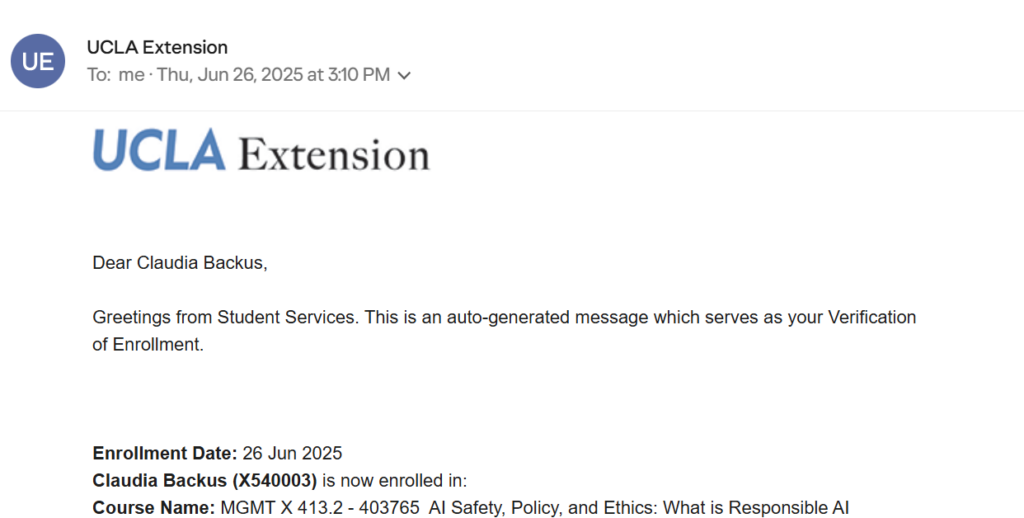
    My interest in artificial intelligence did not begin at this conference. Last summer, I took a UCLA Extension course called AI Safety, Policy, and Ethics: What is Responsible AI. I wanted to understand not only what artificial intelligence can do, but also how it should be used responsibly, including questions involving ethics, safety, transparency, accountability, and privacy.

    Even after completing my formal education, I have always enjoyed taking classes and continuing to learn. Real estate, technology, finance, and business are constantly changing, and I do not think learning should stop simply because you have a degree or a professional license.

    Even after graduation, I have always enjoyed continuing to learn. Last summer, that curiosity led me to take AI Safety, Policy, and Ethics: What is Responsible AI through UCLA Extension.

    AI Has Already Changed the Way I Learn Real Estate

    One reason I personally appreciate AI is that it helps me ask better questions. Real estate has an enormous amount to learn, from MLS rules and contracts to disclosures, market statistics, pricing considerations, financing, local regulations, and technology. When I encounter something unfamiliar, AI can help me understand terminology, organize a complicated subject, think through questions I may not have considered, and identify what I need to research further.

    I find that incredibly useful, but there is an important distinction between using AI to help formulate a question and assuming that its answer is correct. I still need to verify important information through the appropriate sources, review MLS data, understand the property and local market, and sometimes ask another professional who knows considerably more about a particular subject than I do. AI can help me learn, but it does not eliminate my responsibility to do my homework.

    There Is More Than One AI Tool

    One of the slides at The MLS Summit showed several general purpose AI tools together, including ChatGPT, Claude, Gemini, and Perplexity. I liked that slide because it was a reminder that AI is no longer one mysterious piece of technology. Professionals now have access to different tools that can assist with research, organization, analysis, communication, and productivity.

    Artificial intelligence was part of the conversation at The MLS Summit 2026, including how tools such as ChatGPT, Claude, Gemini, and Perplexity are becoming part of everyday professional workflows.

    For real estate professionals, these tools can potentially help us organize information, analyze data, prepare for conversations, research unfamiliar topics, and work more efficiently. That can be valuable, but efficiency is not the same thing as judgment.

    A Home Is Not Just a Collection of Data

    This is where I think the conversation becomes especially relevant for home sellers. AI can analyze numbers very quickly, recognize patterns, and process amounts of information that would take a person considerably longer to review. That ability can be extremely helpful when we are studying a market or trying to make sense of a large amount of real estate data.

    But determining how to position a particular home for sale requires context too. How does the home compare with the competition buyers are seeing right now? Which comparable properties are truly comparable? Does a renovation add the value a homeowner expects it to add? How might buyers respond to the condition of the property? Is there something unusual about the location, lot, layout, view, privacy, or neighborhood that changes the comparison? These are the kinds of questions where data is important, but interpreting the data matters just as much.

    There is also something even more important that a computer cannot decide for a homeowner: what the seller actually wants. One person may prioritize price, while another may care more about timing, privacy, convenience, or certainty. A family may also have circumstances that influence which selling strategy makes the most sense. Understanding those priorities requires a conversation, not simply an algorithm.

    AI Can Provide Information, but People Provide Context

    I do not see AI and real estate professionals as competitors. I think the better question is whether a real estate professional knows how to use technology without outsourcing judgment to it. If AI can help me research something faster, discover a question I should be asking, or organize information so I can spend more time understanding a seller’s goals, I consider that valuable.

    At the same time, I never want technology to become a substitute for listening. For me, good real estate service still means understanding the person sitting across from me, doing the research, verifying important information, explaining the available choices, and being willing to say, “I need to look into that further,” when I do not know an answer. In many ways, I think AI makes that responsibility more important, not less.

    The Future of Real Estate Can Be Both High Tech and Human

    I am excited about artificial intelligence, and I want to keep learning about it, experimenting with it, and finding responsible ways to use it in my work. At the same time, I hope the real estate industry never loses sight of what technology is supposed to accomplish. It should help us become better informed, ask better questions, work more efficiently, and ideally give us more time and better information to serve people well.

    Homes are personal. Selling one can involve finances, family, memories, uncertainty, and major life decisions. No matter how sophisticated our technology becomes, I believe there will always be value in having a knowledgeable human being listen, think, research, explain, and care.

    I am grateful that I have opportunities to keep learning, whether through a UCLA Extension classroom, a real estate conference, the MLS, or simply asking another question when I realize there is something I do not yet understand. For me, that is what learning is ultimately for: not simply knowing more, but becoming better equipped to be of service to others.

    Claudia Backus, MBA, REALTOR®
    California Real Estate Broker
    Serving Pacific Palisades & the Westside

  • What I Learned at The MLS Summit 2026: Why the MLS Still Matters to Los Angeles Home Sellers

    What I Learned at The MLS Summit 2026: Why the MLS Still Matters to Los Angeles Home Sellers

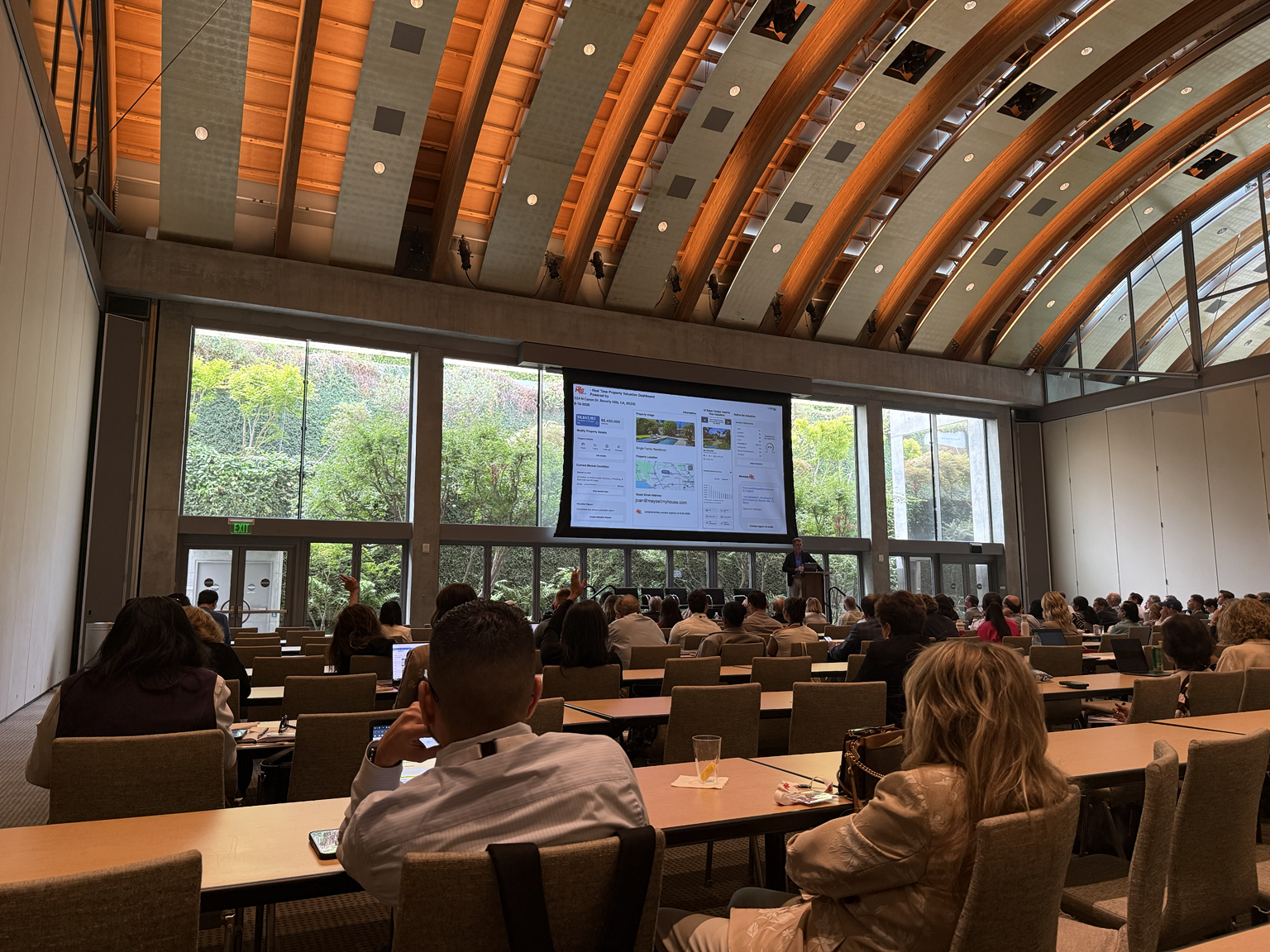
    This week, I attended The MLS Summit 2026 at the Skirball Cultural Center on the Westside of Los Angeles. I went ready to learn, and I left with an even greater appreciation for how much information is available through the MLS and how important it is for real estate professionals to know how to use that information well.

    As a real estate broker, I believe knowledge is part of service. The more I understand about the market, the tools available to me, and the choices available to sellers, the better prepared I am to help someone make a thoughtful decision about one of their largest assets. One of my biggest takeaways from the day was simple: the MLS is much more than a place where homes are listed for sale.

    A fun day of learning at The MLS Summit 2026. There is always more to learn in real estate, and I believe that knowledge helps me better serve my clients.

    So, Why Does the MLS Still Matter to Home Sellers?

    Today, homeowners have access to an incredible amount of real estate information online. You can search for homes, look at estimated values, review recent sales, and follow the market from your phone. That access is useful, but having information and knowing how to interpret it are not always the same thing.

    For a homeowner preparing to sell, the questions become much more specific. Which recently sold homes are actually comparable to yours? What homes are currently competing for the same buyers? How long are similar properties taking to sell? Have there been price reductions? What happened with listings that did not sell? And what does all of that information mean for your particular home?

    This is where professional MLS access, combined with research, local knowledge, and human judgment, can become very valuable. The MLS gives real estate professionals detailed information that can help us understand not only what has sold, but also what is happening in the market right now.

    A CMA Is More Than a Number

    One of the sessions that especially resonated with me was about the Comparative Market Analysis, or CMA. To me, a good CMA is homework. It means studying the property, looking carefully at relevant comparable sales, understanding the current competition, considering the differences between properties, and paying attention to what is happening in that particular market.

    That matters because pricing a home is not simply about finding a number that sounds good. A thoughtful pricing strategy should have a reason behind it, and a seller should be able to understand that reason. Data is important, but so is the ability to interpret it and explain what it may mean for a specific property.

    Technology Can Help, but Judgment Still Matters

    I love AI, and I believe technology will continue changing real estate in ways we are only beginning to understand. AI can help professionals research, organize information, identify patterns, and work more efficiently. I am excited to keep learning how to use these tools responsibly and effectively.

    At the same time, the summit reinforced something important for me. More technology does not make good real estate information less important. It makes knowing what information to trust and how to use it even more important. A seller does not need someone simply because that person can pull up data. A seller needs someone who can study the information, ask good questions, explain what matters, and apply it to the seller’s actual situation.

    AI was part of the conversation at The MLS Summit 2026, and I believe these tools can help real estate professionals work more efficiently while still relying on human judgment and trusted market information.

    Sellers Should Understand Their Options

    Another reason the MLS continues to matter is exposure and choice. Not every seller has exactly the same priorities. One homeowner may want broad exposure. Another may care deeply about privacy. Someone else may be focused on timing, convenience, cost, or having more control over the selling process.

    My philosophy is not that every homeowner needs exactly the same service. I believe in being a broker who gives sellers options, explains those options clearly, and helps them understand the advantages and limitations of each one. The right approach should be based on the seller’s goals, the property, the market, and the rules that apply.

    My job is not to push someone toward the option that benefits me most. My job is to help a seller understand the choices, provide useful information, and support that seller in making a decision that makes sense for them.

    Knowledge Is Part of Service

    I left The MLS Summit 2026 reminded of how much there is to learn about the MLS and how valuable that learning can be. Real estate changes, technology changes, MLS tools and rules evolve, and markets change. I want to keep learning because every new piece of knowledge gives me another opportunity to become more useful to the people I serve.

    For me, being a good broker is not about pretending to know everything. It is about doing the homework, asking questions, continuing to learn, and taking the time to explain things clearly. If you are thinking about selling a home in Pacific Palisades or elsewhere on the Westside of Los Angeles, you deserve to understand the market, the information behind the recommendations you receive, and the choices available to you.

    I am grateful for opportunities like The MLS Summit that allow me to learn from others, strengthen my knowledge, and bring that knowledge back to the people I serve. At the end of the day, real estate is about more than properties and numbers. It is about people, trust, and being of service to others. I hope to keep learning with gratitude, keep showing up with a heart for service, and use what I learn to help others make informed decisions with greater confidence.

    Claudia Backus, MBA, REALTOR®
    California Real Estate Broker
    Serving Pacific Palisades & the Westside